
best car seat lumbar support cushion adjustable is a mouthful, but the need behind it is simple: your lower back wants support that actually fits your body and your car seat, not a one-shape pad that slides around and calls it “ergonomic.”
If you drive a lot, sit in traffic, or commute with a seat that curves the wrong way, you already know how this goes, you feel fine at first, then you notice your hips tilting, your shoulders creeping forward, and by the time you park, your back feels tight. An adjustable lumbar cushion can help in many cases because it lets you dial in pressure and placement instead of forcing you to adapt to it.

One quick note before we get tactical: back pain has lots of causes. A cushion can reduce strain from poor posture or a flat seat, but if you have numbness, radiating leg pain, or symptoms that keep returning, it’s smarter to talk with a clinician or physical therapist.
What “adjustable lumbar support” really means (and why some feel worse)
In product listings, “adjustable” can mean three different things, and only one of them tends to feel truly customizable.
- Height adjustment: you can move the cushion up or down to hit the natural lumbar curve, usually via straps or a sliding mount.
- Depth/firmness adjustment: the support can become thicker or firmer, often through an air bladder, removable inserts, or a tension system.
- Angle/contour adjustment: less common, but some designs flex or have segmented padding that conforms better.
Why do some cushions make you feel worse? Usually it’s one of these: the pad sits too high and pushes your mid-back, it’s too thick and forces an exaggerated arch, or it slides so you keep “re-setting” your posture all drive long. Comfort is not just softness, it’s stability plus the right amount of support.
Quick self-check: do you actually need a lumbar cushion, and what type?
If you’re unsure what to buy, start with a blunt self-check. The goal is to match the cushion style to your seat and your symptoms, not the other way around.
Signs an adjustable cushion is likely to help
- You feel your pelvis tuck under (slouch) after 20–40 minutes of driving.
- Your car seat lower back area feels flat, hollow, or “unsupportive.”
- You get stiffness after driving that eases with walking and gentle movement.
- You share the car and need quick fit changes between drivers.
Signs you should pause and be more cautious
- Pain shoots down the leg, or you notice tingling/numbness.
- You have a recent injury, surgery, or a diagnosed spine condition.
- Any support, even light, increases pain quickly.
According to the National Institute of Neurological Disorders and Stroke (NINDS), back pain can have many contributing factors and sometimes needs medical evaluation, especially when neurological symptoms show up. A cushion can be part of comfort strategy, but it’s not a diagnosis.
Buying guide: features that matter in the real world
When people search for the best car seat lumbar support cushion adjustable, they’re usually trying to avoid two outcomes: buying something that feels fine for a week, then collapses, or buying something bulky that never stays put. Here’s what tends to matter most.
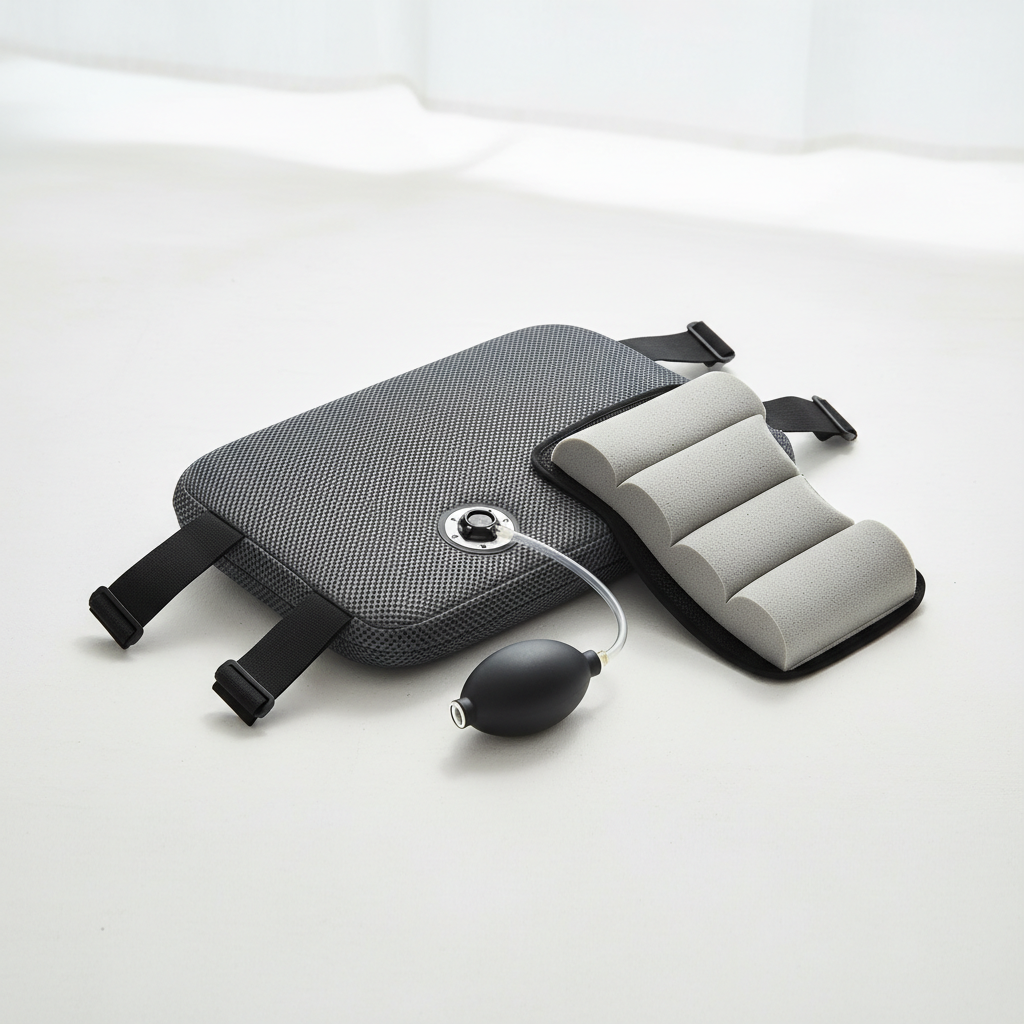
- Adjustment mechanism: air bladder systems offer the most precise depth control, while insert-based designs are simpler and faster.
- Anchoring: two straps (upper and mid/lower) usually stabilize better than one. Grippy backing helps but won’t fix poor strap geometry.
- Size and profile: thick cushions can push you forward, changing your reach to pedals and steering wheel. Low-profile support often works better in compact cars.
- Cover material: breathable mesh reduces sweat on long drives; soft knit feels nicer but can trap heat in summer.
- Cleanability: removable, washable covers matter more than people think, especially with kids, pets, or rideshare use.
If you’re torn between memory foam and air lumbar, here’s the practical rule: memory foam can feel “set and forget,” air can feel “tune it per drive.” Neither is automatically superior.
Comparison table: pick the right adjustable style for your commute
Use this as a shortcut before you start scrolling product pages for hours.
| Type | How it adjusts | Best for | Watch-outs |
|---|---|---|---|
| Air bladder lumbar | Inflate/deflate to change depth | People who want precise support, shared vehicles | Valve/pump quality varies, over-inflation feels harsh |
| Insert-based cushion | Add/remove foam layers | Simple setup, less “fiddly” daily use | Adjustment steps are coarse, can feel bulky |
| Strap-positioned contour pad | Move height, tension via straps | Drivers who mainly need better placement | Limited depth control, may slide on slick upholstery |
How to install and adjust it so it actually works
Most “this didn’t help” reviews come down to fit. The cushion can be good, but placement is off by an inch or two, and that inch matters.
Step-by-step setup (5 minutes)
- Start with your seat: set seat height, distance to pedals, and backrest angle the way you normally drive.
- Place the cushion low: aim the thickest point at the small of your back, not the mid-back. If unsure, start slightly lower and move up gradually.
- Anchor it tight: straps should be snug enough that the cushion does not drift when you enter/exit the car.
- Add support slowly: with air models, inflate a little, sit for a minute, inflate again if needed. With inserts, begin with the thinnest setup.
- Test in motion: take a 10–15 minute drive. Static testing in the driveway often feels “fine” but changes once you brake, turn, and shift posture.
A useful cue: you want to feel “held up,” not “pushed forward.” If you suddenly feel like your arms are reaching too far, the cushion is probably too thick or too high.
Common mistakes (and the small fixes that save the purchase)
There are a few predictable traps. They’re easy to correct, but people rarely do because they assume discomfort means the product is wrong.
- Over-inflating on day one: the back often prefers a gradual change. Try less support for a couple drives and adjust upward.
- Stacking with a big seat cover: thick covers can make straps slip and change the cushion’s angle.
- Ignoring seat recline: if the backrest is too reclined, lumbar support can feel aggressive. A slightly more upright angle often feels more natural.
- Chasing softness: very soft cushions can compress and leave you slouching again, especially on long trips.
According to the American Physical Therapy Association (APTA), posture and ergonomics can influence discomfort for many people, but solutions are usually individual. If a cushion helps only in one car but not another, that’s not weird, it’s the seat geometry doing its thing.
When to get professional input (and what to ask)
If pain persists, escalates, or comes with neurological symptoms, it’s reasonable to seek professional help rather than keep swapping cushions. A clinician can help rule out issues that a comfort accessory won’t address.
Consider asking:
- Does my driving posture suggest I need lumbar support, hip support, or seat angle changes?
- Is it safer to use a low-profile support to avoid changing my driving position too much?
- What signs would mean I should stop using this support and reassess?
Also keep safety in mind: any cushion should not interfere with seatbelt fit, headrest position, or your ability to sit back securely in the seat.

Key takeaways + a practical recommendation path
If you want the quickest path to a good buy without overthinking it, narrow the decision like this:
- If you share a vehicle or your comfort changes day to day, an air-adjustable option is usually the most flexible.
- If you hate fiddling, pick an insert-based cushion with two strong straps and a breathable cover.
- If your main issue is the cushion sliding or sitting in the wrong spot, prioritize anchoring and height placement over extra thickness.
For most commuters, the “best” choice is the one that stays put, supports lightly, and doesn’t change driving position too much. That’s also how you end up actually using it.
FAQ
What makes the best car seat lumbar support cushion adjustable for long drives?
Usually it’s stable anchoring plus real depth control. Long drives expose sliding, overheating, and over-aggressive support, so breathable materials and a secure strap system matter as much as the padding.
Is an air lumbar cushion better than memory foam?
It depends on how sensitive you are to pressure and how much you want to fine-tune. Air lets you micro-adjust, while foam feels simpler. Many people prefer air for shared cars and foam for consistent daily commutes.
Where should I place an adjustable lumbar cushion on my car seat?
Most of the time, it belongs in the small of your back, a bit lower than people expect. If it’s pushing your ribs or mid-back, it’s likely too high.
Can a lumbar cushion cause back pain?
It can, especially if it’s too thick, over-inflated, or positioned high. If discomfort increases quickly or you notice numbness or tingling, it’s wise to stop and consider medical advice.
Will a lumbar cushion affect my driving safety?
It might if it changes how far you sit from pedals or how your seatbelt fits. After installing, double-check seatbelt routing, headrest position, and that you can still sit back firmly against the seat.
How tight should the straps be?
Tight enough that the cushion doesn’t drift when you get in and out, but not so tight that it warps the cushion shape. If you’re constantly re-centering it, the anchoring is not doing its job.
What if my car already has built-in lumbar support?
Try adjusting the built-in support first, because it’s designed for that seat. If the range is too mild or hits the wrong spot, an add-on cushion can help, but keep the combined support modest to avoid over-arching.
If you’re currently bouncing between products and still can’t tell what will feel right, it often helps to choose based on your seat type and adjustment preference first, then filter by anchoring and profile, it’s a more reliable way to land on a cushion you’ll actually keep using.