
how to fix car power window that stuck usually comes down to one of three things: a weak electrical path, a tired window motor/regulator, or the glass physically binding in the tracks.
It sounds minor until you realize you can’t vent the cabin, can’t pay at a drive-thru, and you’re one rainstorm away from a soaked interior. The good news, many “stuck up or down” cases are diagnosable in your driveway with basic tools and a little patience.
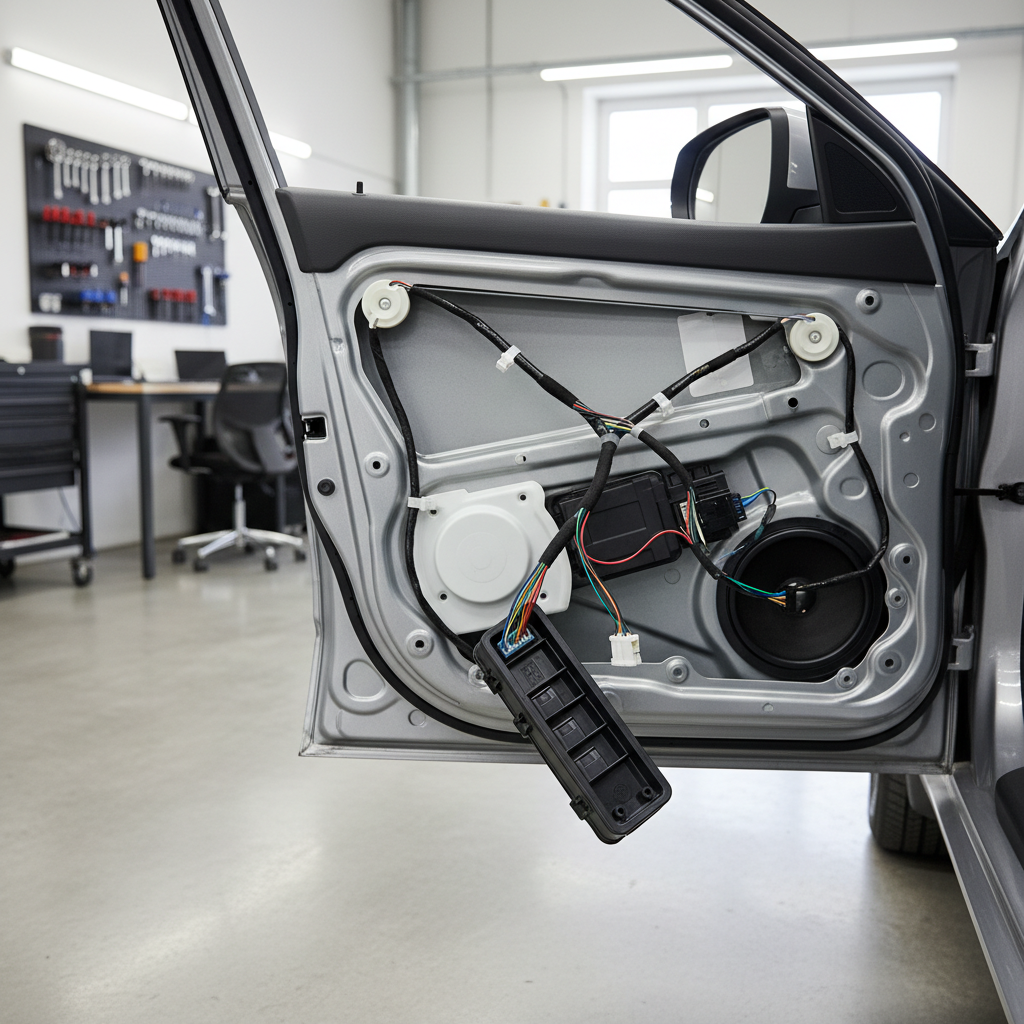
What trips people up is guessing and buying parts too early. A dead fuse feels like a bad motor, and a bad switch can mimic a failing regulator. This guide walks through a practical order of checks, so you can avoid the expensive roulette.
Safety note: door glass and regulators can pinch hard, and side airbags may be inside the door on many vehicles. If you’re unsure about your model’s airbag layout or wiring, it’s reasonable to stop and ask a qualified technician.
What “stuck up or down” usually means (and why it happens)
Power windows fail in patterns, and the pattern matters because it points to the likely culprit. In real life, it’s rarely “the motor” in isolation.
- No sound at all: often a fuse, switch, wiring break in the door jamb, or a body control module issue (vehicle-dependent).
- Clicking or a faint hum: motor tries but can’t move glass, usually binding tracks, failing regulator, or weak electrical connection.
- Window moves slowly: dry/dirty run channels, aging motor, or glass out of alignment.
- Works from one switch but not the other: likely the bad switch, child lock settings, or master switch faults.
- Drops into the door or tilts: regulator cable/scissor mechanism failure is common.
According to NHTSA, power windows can pose pinch and entrapment hazards, especially if something keeps auto-up from stopping. If your auto-up behaves strangely after you fix the jam, treat it seriously and verify the anti-pinch function.
Quick self-check: identify your case in 5 minutes
Before removing trim, do a quick set of checks. This often tells you whether you’re dealing with power, control, or a mechanical bind.
Fast checks you can do immediately
- Try other windows: if none work, think fuse/relay/module rather than a single door issue.
- Test both switches (driver master and that door switch). One works and one doesn’t usually means the switch, not the motor.
- Listen carefully: motor noise without movement points mechanical, silence points electrical.
- Check for “auto” weirdness: auto-up/down that stops mid-travel can be pinch protection reacting to resistance.
- Door position test: open the door halfway and try again; intermittent operation can hint at broken wires in the hinge area.
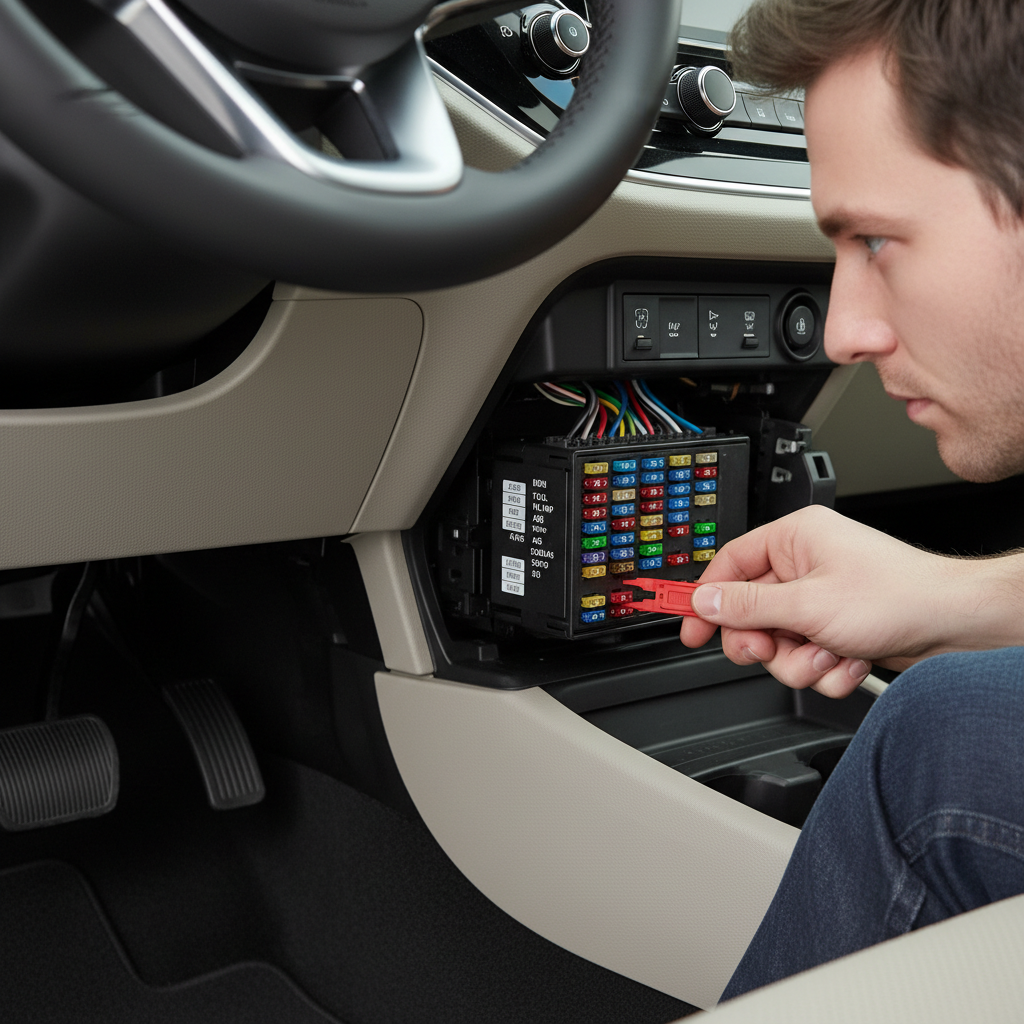
If your goal is to decide “DIY today or shop tomorrow,” these checks are the fastest way to get honest signal before you spend time pulling a door panel.
Common causes and the most efficient fixes (in the right order)
When people search how to fix car power window that stuck, they usually want a step-by-step path that avoids rework. This order is practical: easiest, cheapest, most common first.
1) Fuse, relay, and power supply issues
- Find the correct fuse in the owner’s manual or fuse-box diagram, don’t guess based on “looks similar.”
- If the fuse is blown, replace once with the correct rating. If it blows again quickly, stop and diagnose the short, repeated fuses can create bigger electrical damage.
- Some vehicles use relays or integrated modules for window power. If multiple windows act up together, power/relay/module moves up the suspect list.
2) Bad window switch (master switch or door switch)
- If the window works from the driver’s master switch but not the door switch, that door switch or its connector is often at fault.
- If it works from the door switch but not from the master, the master switch assembly can fail, coffee spills and wear are common causes.
- Look for loose connectors or greenish corrosion on pins; contact cleaner can help if corrosion is mild.
3) Wiring break in the door jamb
- The rubber boot between the body and the door flexes every time you open the door, wires can crack inside the insulation.
- Symptoms are often intermittent: works when you hold the door “just so,” fails when fully open.
- A proper fix is repairing the wire (solder/heat shrink or quality crimp connectors) and restoring strain relief.
4) Glass binding in the run channels (dry felt, dirt, misalignment)
- Clean the window run channels and apply a silicone-based lubricant designed for rubber/felt channels.
- If the glass tilts or rubs, alignment adjustments may be needed inside the door, vehicle-specific.
- A stuck-up window that “pops” free after you help it may still need channel cleaning, otherwise it returns.
5) Failed window regulator or motor
- A slipping cable, broken plastic guide, or bent scissor arms can jam the mechanism.
- Motors can wear and pull extra current, which sometimes blows fuses or triggers thermal protection.
- If the glass dropped inside the door, assume regulator failure until proven otherwise.
DIY troubleshooting workflow (tools, steps, and a simple decision table)
You do not need a full shop to diagnose most window problems, but you do need a calm approach. Rushing is how clips break and glass gets scratched.
Tools that help (not all required)
- Trim removal tool, Phillips/torx drivers
- Test light or multimeter
- Plastic pry tools, needle-nose pliers
- Silicone spray for window channels
- Painter’s tape (to secure glass)
Decision table: symptom → most likely cause → what to do next
| Symptom | Most likely cause | Next step |
|---|---|---|
| No sound, only one window affected | Switch or wiring | Test from other switch, check door-jamb boot |
| No windows work | Main fuse/relay/module | Check main fuse, relay, battery voltage |
| Motor hums, glass doesn’t move | Regulator jam or glass binding | Lube channels, inspect regulator behind panel |
| Window moves slow, worse in cold | Dry run channels, weak motor | Clean/lube channels, check voltage at motor |
| Glass tilted or dropped | Regulator failure | Remove panel, secure glass, replace regulator |
Key point: if you have good voltage at the motor when pressing the switch and the mechanism still won’t move, you’re usually past “electrical” and into regulator/motor or binding issues.
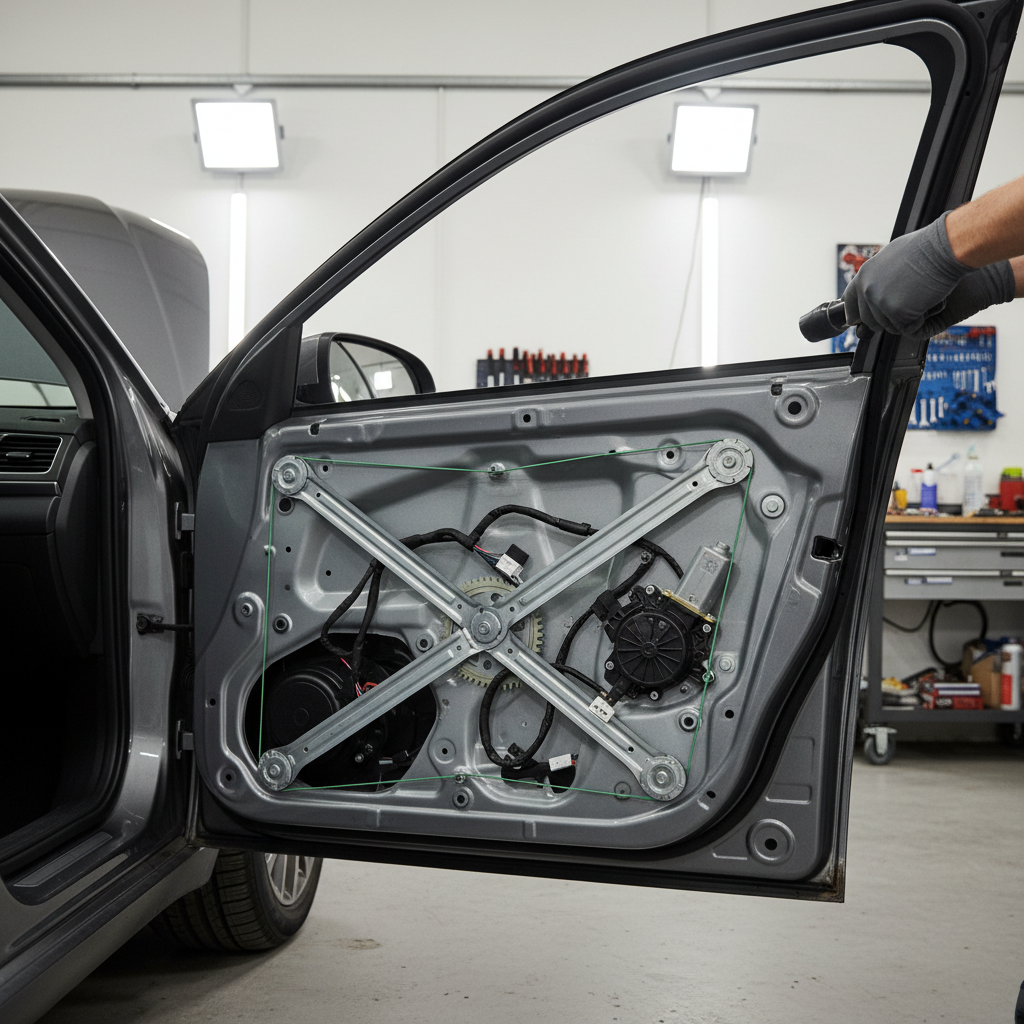
If you’re not getting voltage at the motor, work backward: connector, harness, switch, fuse. If you are getting voltage and a solid ground, the mechanism becomes the main suspect.
Practical “get it closed today” options (when the window is stuck down)
A window stuck down is the urgent version of this problem. The goal is weather security first, perfect repair second.
- Try the door slam trick gently: with the switch held in the “up” position, closing the door can jostle a tired motor. This is not a repair, it’s a temporary nudge.
- Tap the door near the motor area: light tapping while holding the switch can free stuck brushes in a worn motor, again temporary.
- Support and raise the glass by hand (only if the regulator is loose and the glass can move): remove the door panel, detach the glass from the regulator if accessible, slide the glass up, then tape it at the top frame with painter’s tape.
- Use plastic sheeting: if you can’t raise the glass safely, seal the opening with clear plastic and tape for a short-term solution.
Be careful with fingers near scissor regulators and cable systems, pinch points are real. If the mechanism looks twisted or frayed, stopping and calling a shop often saves you from broken glass.
Common mistakes that waste time (or break parts)
Most DIY frustration comes from a few predictable moves. Avoid these and your odds improve fast.
- Replacing the motor before checking the switch: switches fail more often than people expect, and they’re easier to test.
- Skipping the door-jamb wiring check: intermittent failures love to hide there.
- Using the wrong lubricant: grease or petroleum products can swell rubber. Silicone spray made for window channels is safer in many cases.
- Forcing the glass: if the glass binds, forcing can chip edges or bend guides, turning a small problem into a regulator job.
- Ignoring calibration: some vehicles need window “relearn” after battery disconnect or regulator work, auto-up/down can act odd until it’s relearned.
According to AAA, regular vehicle maintenance and paying attention to small issues early can prevent larger repairs. With windows, the “small issue” is often slow movement that people ignore for months.
When it’s smarter to get professional help
DIY is fine for many window problems, but a few situations justify a shop visit, even if you’re handy.
- Side airbag in the door: if you’re unsure where it sits or how to work around it safely.
- Repeated blown fuses: indicates a short or a motor drawing excessive current, both need proper diagnosis.
- Glass off track or damaged: mis-seated glass can shatter under stress, replacement glass and alignment can get expensive.
- Water intrusion already happened: wet door modules and connectors can create secondary electrical problems that take time to chase.
- You need it reliable immediately: if the window must work daily, a shop can often fix it faster than a trial-and-error parts approach.
If you bring it in, describe symptoms in plain language: when it fails, what you hear, whether other windows work, and whether door position changes anything. That saves diagnostic time.
Wrap-up: the most reliable way to fix it without guessing
how to fix car power window that stuck is less about one magic trick and more about testing in a sensible order: confirm power, confirm switch control, check door-jamb wiring, then move to binding/regulator and motor issues.
If you do one thing today, do the quick self-check and fuse/switch test before buying parts. If you do a second thing, clean and lightly lubricate the run channels, slow windows often improve more than people expect.
If you’re stuck in a parking lot with the glass down, focus on securing the opening first, then schedule a proper repair before the problem returns.
FAQ
Why did my power window stop working suddenly?
A sudden stop often points to an electrical interruption like a blown fuse, a failed switch, or a wire break at the door hinge area. Mechanical failures can be sudden too, especially when a regulator cable snaps.
Can a bad battery cause a stuck power window?
It can contribute, especially if voltage dips during cranking or the battery is weak, but usually you’ll see other electrical symptoms. If only one window fails, the battery is less likely than the door’s switch/wiring/regulator.
How do I know if it’s the regulator or the motor?
If you can measure voltage at the motor connector while pressing the switch and the glass still won’t move, the motor or regulator is suspect. A tilted glass or grinding noises tend to point more toward the regulator mechanism.
My window moves slowly, what’s the first thing to try?
Clean the run channels and use a silicone-based channel lubricant. If it improves but still struggles, then start checking motor voltage drop and condition.
Is it safe to keep using the switch if the window is stuck?
In many cases it’s better to stop. Holding the switch can overheat a struggling motor or keep stressing a jammed regulator. A few short tests are fine, repeated long holds are not.
Why does the window work only when the door is partly open?
This is a classic sign of broken or frayed wiring in the door-jamb boot. The wire can make contact at one angle and separate at another, so door position becomes the “switch.”
Do I need to reset or relearn the auto window function after a repair?
Many vehicles require a relearn procedure after power loss or regulator replacement. The steps vary by make and model, so checking the owner’s manual or a factory service source is worth it.
If you’re working through how to fix car power window that stuck and you’d rather not pull the door panel twice, a repair guide for your exact make/model or a quick diagnostic at a trusted local shop can be the more time-efficient path, especially when wiring or airbags are involved.