
best car license plate frame rust proof usually comes down to one thing: choosing the right material and hardware so you don’t end up with orange streaks, seized screws, or a frame that looks “aged” after one salty winter.
If you’ve ever tried to remove a plate and found the screws fused to the bracket, you already know this isn’t just cosmetic. Rust can make simple jobs annoying, can scratch paint during removal, and in some cases can weaken the frame so it bends or rattles.
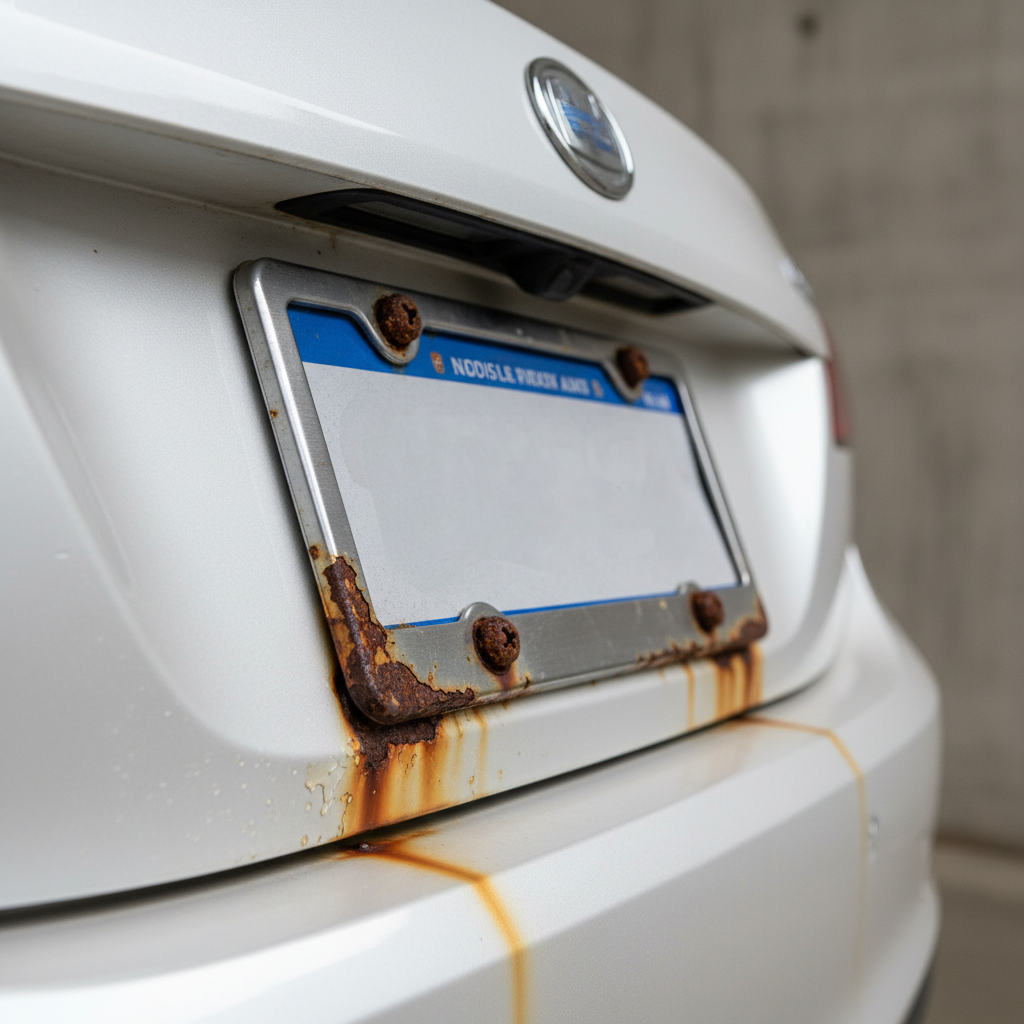
This guide breaks down what actually makes a plate frame rust-proof in real-world U.S. conditions, how to tell marketing from materials, and what to buy depending on where and how you drive. You’ll also get a quick install checklist so the “rust-proof” choice doesn’t get ruined by the wrong screws.
What “rust proof” really means for license plate frames
Most frames fail at the edges, screw holes, and fasteners, not the middle. So “rust proof” is less a single feature and more a combo of material, surface finish, and hardware that resists corrosion.
- Material resists corrosion: Stainless steel and quality polymers don’t rust the way plain steel does.
- Finish resists chipping: A good powder coat or anodized layer helps, but once it chips, corrosion can start underneath.
- Hardware matters: Cheap carbon-steel screws rust first, then stain the frame and plate area.
Also, “rust proof” does not mean “won’t ever corrode.” In coastal areas or heavy road-salt states, even stainless can show tea-staining (surface discoloration) depending on grade and maintenance.
Why license plate frames rust so fast (real-world causes)
People often blame the frame brand, but the conditions are usually the bigger culprit. A frame that survives in Arizona can look rough quickly in Michigan.
- Road salt and brine: Winter de-icers accelerate corrosion, especially in seams and screw heads.
- Trapped moisture: Foam pads or tight edges can hold water against metal, creating a “wet pocket.”
- Mixed metals (galvanic corrosion): Stainless screw + cheap steel bracket, or aluminum touching steel, can speed up corrosion in the weaker metal.
- Paint chips: A small chip around the screw hole can become a rust point that spreads.
- Harsh car wash chemicals: Strong wheel/bug cleaners can attack coatings over time.
According to Federal Highway Administration (FHWA), winter maintenance practices include the use of de-icing chemicals, which can be corrosive to vehicles and components. That’s why the “rust-proof” question is really a “salt + water + time” question.
Materials and finishes that actually resist corrosion
If you want the best car license plate frame rust proof outcome, pick materials that don’t rely solely on a cosmetic coating to survive. Here’s the practical breakdown.
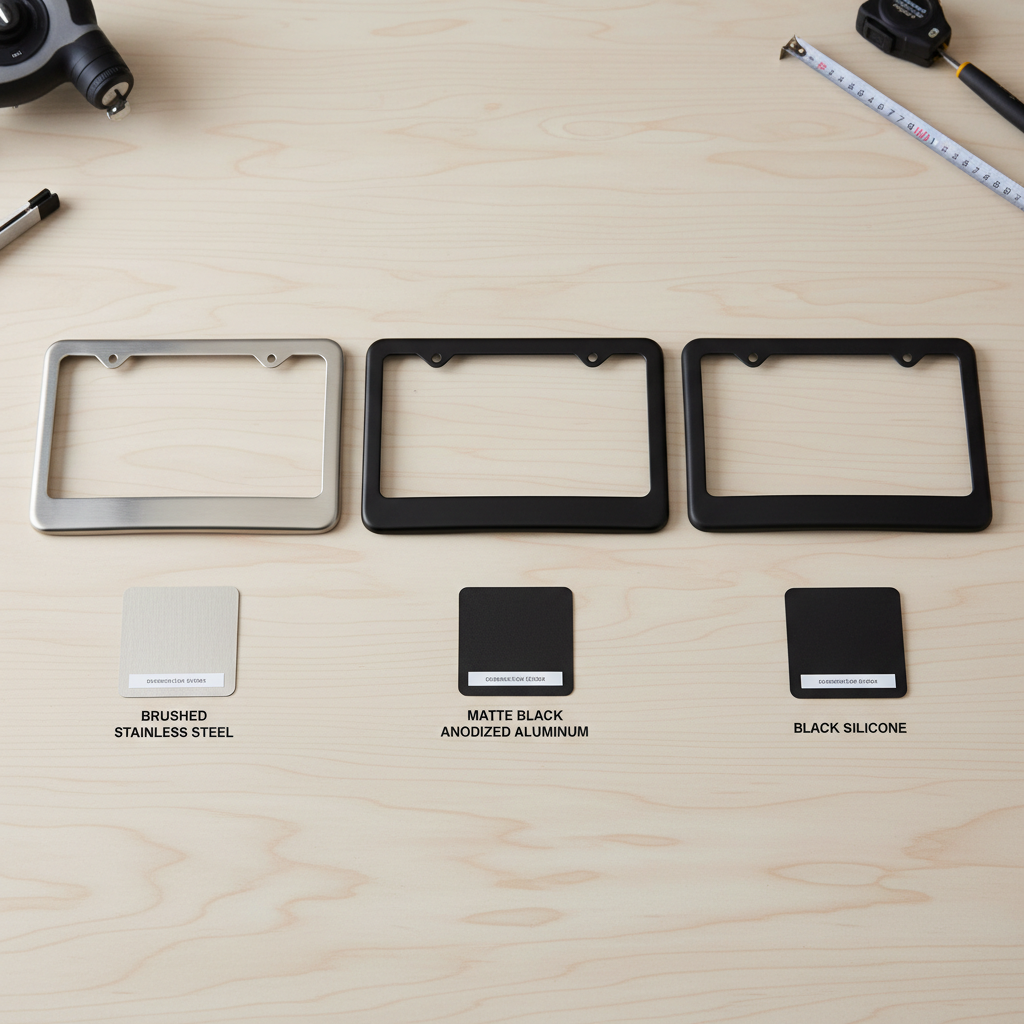
Quick comparison table
| Option | Rust resistance | Best for | Watch-outs |
|---|---|---|---|
| Stainless steel (304/316) | High (316 highest) | Snow/salt states, coastal areas | Cheap “stainless” grades can discolor; fingerprints on polished finishes |
| Anodized aluminum | High (won’t rust) | Most climates, lightweight builds | Can pit if coating gets damaged; edges can oxidize |
| Powder-coated steel | Medium | Dry climates, budget buys | Chips lead to rust; screw holes are common failure points |
| Silicone frame | Very high (no rust) | Quiet/no-rattle installs, lease returns | Can trap grit; some designs cover registration sticker edges if misaligned |
| Plastic (ABS/poly) | High (no rust) | Budget, mild climates | UV fade or cracking varies by quality |
My practical take on “best”
- If you see winter salt or ocean air, 316 stainless (or at least good 304) plus stainless hardware tends to be the most “set it and forget it.”
- If you hate rattles or worry about paint, silicone is underrated because it removes the rust variable entirely.
- Powder-coated metal can be fine, but only if the coating stays intact and you avoid cheap screws.
Fast self-check: which rust-risk bucket are you in?
This is the part most buyers skip, then they wonder why the frame fails early. Answer quickly, no overthinking.
- High risk: You drive in snow states (salt/brine), near the ocean, or you park outside year-round.
- Medium risk: Occasional winter trips, frequent rain, lots of automatic washes.
- Lower risk: Dry climate, garage parking, minimal winter exposure.
If you’re in the high-risk bucket, treat “rust proof” as a system: frame + screws + mounting surface. If you only upgrade the frame, rust often shows up first on the fasteners.
How to choose the best rust-proof license plate frame (by scenario)
Instead of chasing a “top 10,” match the frame to how you actually use the car. That’s how you get the best car license plate frame rust proof result without paying for features you won’t benefit from.
Snow belt, salted roads, or coastal air
- Frame: 316 stainless (preferred) or quality 304 stainless.
- Hardware: Stainless screws + nylon washers, ideally anti-seize compatible.
- Design: Avoid deep crevices that hold slush and grit.
Daily driver in mixed weather (most of the U.S.)
- Frame: Anodized aluminum or stainless.
- Hardware: Stainless screws, cap covers optional.
- Priority: Edges that sit flush so dirt doesn’t grind into paint.
Lease return, paint protection, and no-rattle goals
- Frame: Silicone or high-quality polymer.
- Hardware: Stainless screws plus soft washers.
- Bonus: Silicone often reduces vibration marks on the bumper area.
Show car or “always looks clean” preference
- Frame: Brushed stainless or premium anodized aluminum.
- Finish tip: Brushed hides micro-scratches better than mirror polish.
Installation tips that keep a “rust-proof” frame from rusting anyway
A surprising amount of corrosion starts during install. Not because people do anything crazy, but because little details get missed.
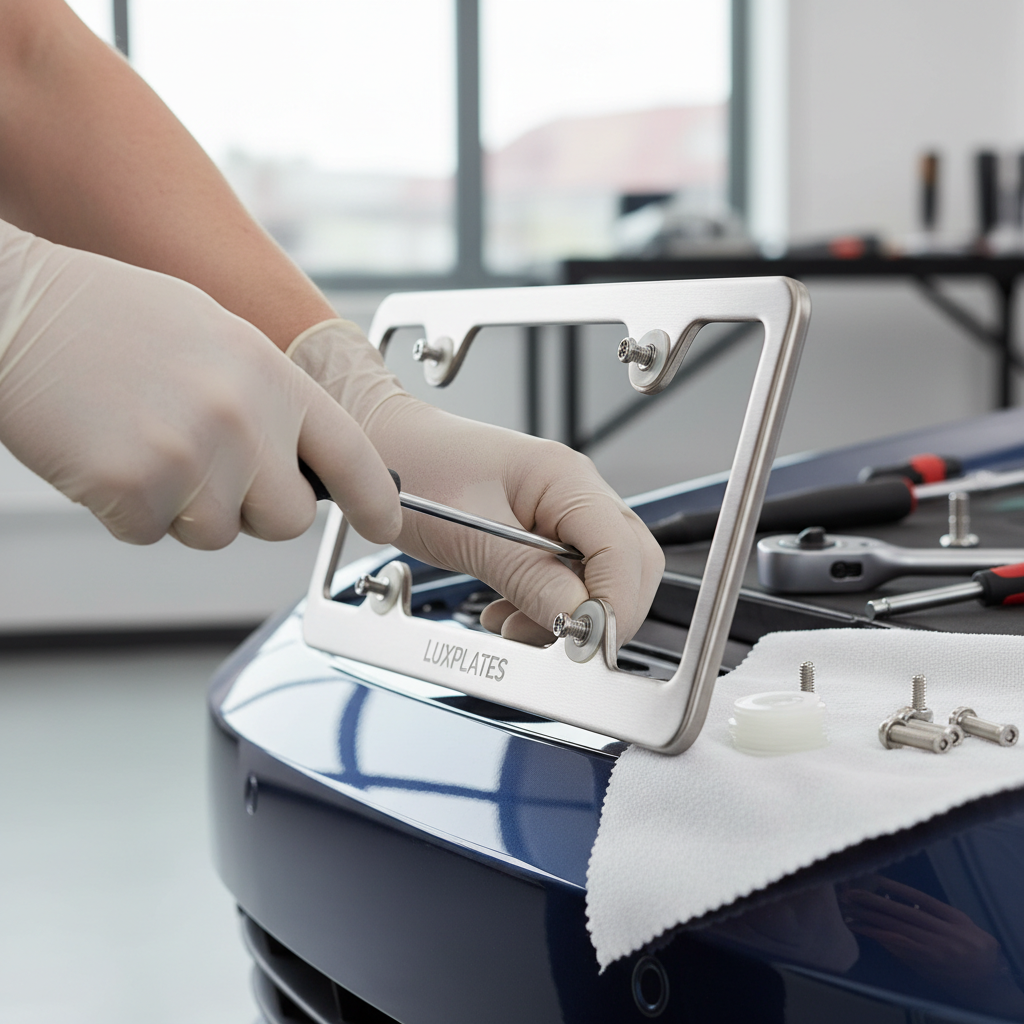
- Use stainless hardware: If the frame is stainless but the screws are cheap steel, the screws usually rust first and stain everything.
- Add nylon/rubber washers: Helps prevent paint scuffs and reduces water sitting directly at the metal-to-metal contact point.
- Don’t overtighten: Cranking down can crack plastic frames, distort aluminum, or chip coatings around holes.
- Consider a tiny amount of anti-seize: Especially in salt states to prevent seized screws later. Use sparingly so it doesn’t smear on paint; if unsure, ask a mechanic.
- Clean the mounting surface first: Grit trapped behind the frame can act like sandpaper over time.
According to U.S. Environmental Protection Agency (EPA), chloride from salt can contribute to corrosion in many environments. Practically speaking, rinsing that area during winter washes can slow the “rust creep” around hardware.
Common mistakes (and what to do instead)
- Mistake: Buying “rust-proof” but reusing old screws. Fix: replace screws and inserts if they show corrosion or stripped heads.
- Mistake: Assuming black paint equals protection. Fix: if it’s steel, the coating quality matters more than color.
- Mistake: Ignoring the back side. Fix: choose frames with smooth backs or add a thin protective pad that doesn’t trap water.
- Mistake: Covering registration stickers. Fix: confirm your state’s rules and ensure the frame window does not block required info.
If you care about avoiding tickets, this is worth a quick check. Many frames are “universal,” but state visibility requirements can be picky, and it varies.
When it’s worth getting help (or replacing more than the frame)
If screws are seized, stripping easily, or the mounting holes spin, forcing it can damage the bumper or bracket. In many cases a shop can remove stuck fasteners quickly with the right tools, and they may suggest replacing the plate bracket or using new threaded inserts.
If you notice corrosion on nearby body hardware or a larger rust issue around the mounting area, consider asking a trusted mechanic or body shop. This article covers plate frames, not structural rust, and it’s better to be cautious when rust spreads beyond cosmetics.
Key takeaways before you buy
- Material wins: stainless, anodized aluminum, or silicone beat coated cheap steel in harsh climates.
- Hardware is half the battle: stainless screws and washers prevent the common “rust halo.”
- Design matters: fewer crevices, smoother edges, less trapped moisture.
- Install gently: overtightening and dirty surfaces shorten lifespan.
If your goal is the best car license plate frame rust proof setup, buy the frame and the fasteners together as a matched kit, then install it like you plan to remove it two years from now without drama.
FAQ
What is the best material for a rust-proof license plate frame?
In many U.S. climates, 316 or 304 stainless steel and silicone are the most reliable picks. Stainless keeps a premium look, silicone removes rust from the equation entirely.
Do stainless steel license plate frames rust?
Stainless typically won’t rust like plain steel, but it can show surface staining or spotting in salty environments, especially if the grade is lower or contaminants sit on it for long periods.
Are anodized aluminum frames better than stainless?
They can be, depending on your priorities. Aluminum won’t rust, and anodizing adds protection, but it can still pit or oxidize if the finish is damaged. Stainless often tolerates abrasion a bit better.
Why do my license plate screws rust even with a “rust-proof” frame?
Because many kits include low-grade screws. Swapping to stainless screws and adding washers usually fixes the most common failure point.
Should I use anti-seize on license plate screws?
In salt-heavy areas it can help prevent seized fasteners, but use a tiny amount and keep it off paint. If you’re unsure what product is safe for your setup, a mechanic can advise quickly.
Can a license plate frame damage my paint?
It can, usually from trapped grit and vibration. Silicone frames or nylon/rubber washers reduce rubbing, and cleaning behind the plate during washes helps more than people expect.
How often should I check or replace my plate frame?
A quick check during oil changes is enough for most drivers. If you see bubbling coating, rust streaks, or screws starting to seize, it’s usually cheaper to replace early than fight it later.
Practical next step
If you want to stop thinking about rust stains every winter, start by choosing a stainless or silicone frame and pairing it with stainless screws and washers, it’s a small upgrade that tends to stay quiet, clean, and easy to service when you need to swap plates.