
Best car seat back protector for kids kicking usually comes down to three things: it fits your vehicle seat shape, it stays put when little feet push all ride long, and it protects without creating a safety headache.
If you drive with kids in a rear seat, you already know the pattern, shoes land right where you can’t easily wipe, mud dries fast, and a quick errand turns into a permanent scuff. The right back-of-seat cover is one of those small buys that can feel like a big win, especially if you plan to keep your car for a while or lease it.
This guide focuses on what actually matters when shopping: materials that clean easily, attachment styles that don’t slide, coverage that matches how your kids sit, and the safety considerations people tend to skip until something goes wrong.
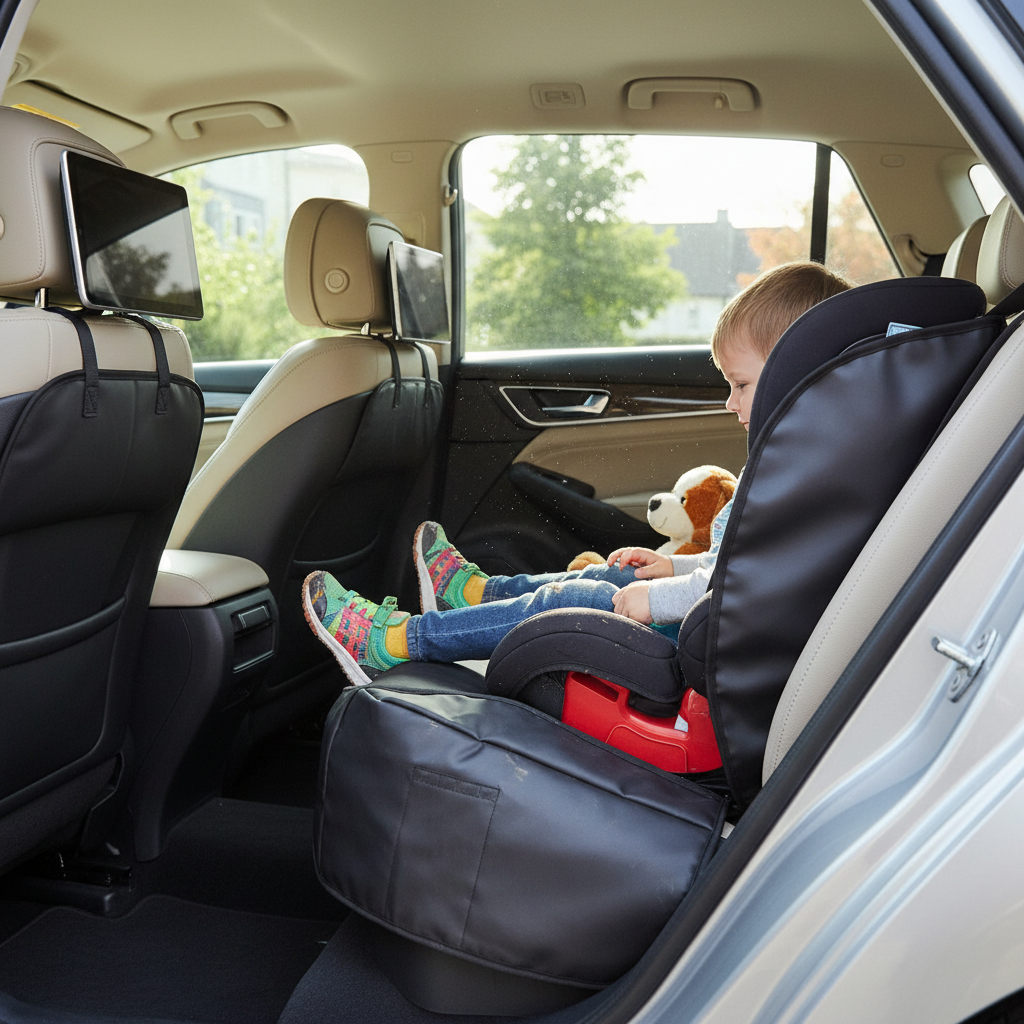
What makes kids kick seats (and why protectors fail)
Most “kicking” is just geometry. Rear-facing and forward-facing car seats set kids’ legs at the perfect height to tap the seat back, and once they discover it makes marks, it becomes a hobby.
Protectors fail for predictable reasons too. They’re often sized like a rectangle even though seat backs are curved, headrests vary a lot, and leather, vinyl, and cloth all create different levels of grip.
- Loose top straps let the mat sag, then every kick drags it lower.
- Slick materials look nice but slide on leather and some synthetic fabrics.
- Too little coverage misses the “kick zone,” especially for booster-age kids.
- Hard-to-clean surfaces turn one rainy soccer day into a permanent stain.
Also worth saying out loud: sometimes the “problem” isn’t the protector, it’s that the kid’s feet are reaching the seat because the child seat or booster position places them too close. You can’t always change that, but it affects what you buy.
Quick self-check: which protector style fits your situation?
Before shopping, take 60 seconds and answer these. It saves you from buying a popular option that’s wrong for your layout.
- Car seat or booster? Car seats often need higher coverage; boosters need wide coverage lower down.
- Leather seats? Prioritize anti-slip backing and stable anchors, sliding is the main complaint.
- Do you need pockets? Pockets can be great, but they can also bulge and pull the protector down.
- Is the headrest removable? Some straps require a headrest to loop around.
- Do you ride-share or carpool? You may want quick on/off install and wipe-clean materials.
If your answer is “boosters + messy shoes + leather,” you’re basically shopping for maximum grip and easy wipe-down, not fancy stitching.
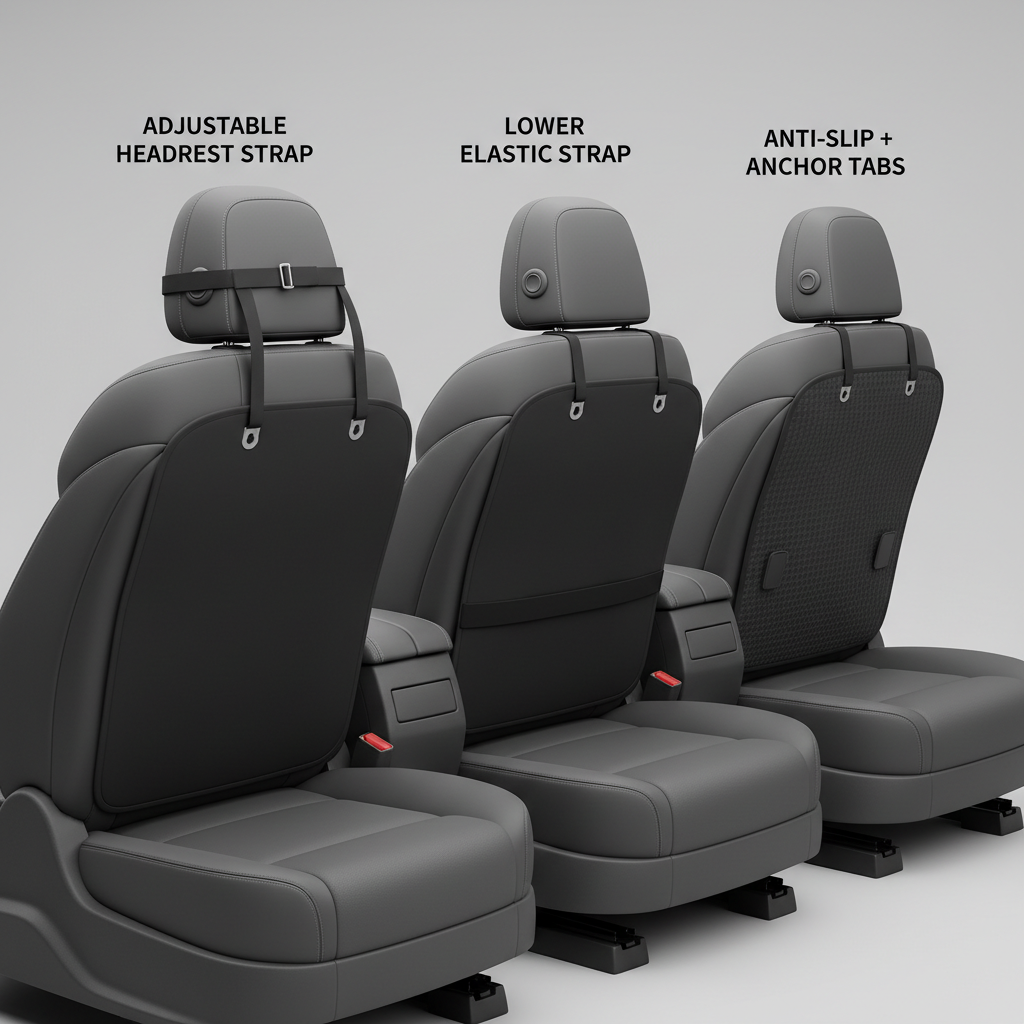
Key features to look for (the stuff that matters after week two)
A protector can look perfect on day one and still annoy you by day fourteen. These features tend to hold up when kids actually use them.
Material: wipe-clean beats “soft” for most families
- Water-resistant polyester or oxford fabric: usually the easiest to wipe and tends to resist scuffs.
- PU “leather”: wipes fast, but can get slick on leather seats and may show crease lines.
- Neoprene-style: good cushion and decent grip, but can trap heat and sometimes smells at first.
If you’re shopping specifically for the best car seat back protector for kids kicking, favor wipe-clean surfaces with a little texture. Smooth, shiny finishes look premium but often slide more.
Stability: two-point attachment usually wins
- Top headrest strap keeps it high and centered.
- Bottom strap or elastic prevents “accordion slide” downward.
- Anti-slip backing helps most on leather and vinyl.
One strap alone can work, but it’s more sensitive to seat shape and daily kicking force.
Coverage: match the “kick zone,” not the product photo
For toddlers in car seats, kicks often land mid-seat. For older kids in boosters, shoes hit lower and wider. Look at where your child’s soles actually hit, then buy for that zone.
Cleaning: choose what you’ll realistically do
- Wipe-only is fastest for daily dirt.
- Machine-washable helps for salt stains and sticky spills, but you’ll remove it less often than you think.
Safety and compatibility notes you shouldn’t skip
Seat back protectors are simple, but they sit in a part of the cabin that interacts with car seats, airbags, and vehicle seat movement.
According to the National Highway Traffic Safety Administration (NHTSA), car seats should be installed and used exactly as instructed by the car seat manufacturer. In practice, that means: if your car seat manual warns against adding unapproved accessories under or around the seat, take it seriously and use a back-of-seat protector that doesn’t interfere with the car seat’s install.
- Don’t route straps through areas that can snag seat adjustment tracks or seatbelt paths.
- Avoid thick padding behind a child seat if it changes how tightly the car seat installs.
- Watch for side airbags in front seats; don’t wrap or strap in a way that could interfere with deployment. If unsure, check your vehicle manual or ask a certified child passenger safety technician.
If anything about your setup feels borderline, it’s reasonable to consult a local CPST. It’s a quick check, and it keeps this “simple accessory” from becoming a safety debate.
Comparison table: how to choose the right type
Here’s a practical way to compare options without overthinking brands.
| Type | Best for | Pros | Watch-outs |
|---|---|---|---|
| Wipe-clean mat with top + bottom straps | Most families, daily kicking | Stays put, easy cleaning, good coverage | More straps to adjust, can twist if installed sloppy |
| Clear vinyl protector | Light dirt, minimal bulk | Shows seat upholstery, quick wipe | Can crack over time, can glare, may slide on leather |
| Heavy-duty fabric with storage pockets | Road trips, organization | Extra storage, large coverage | Pockets add weight and sag, more cleaning around seams |
| Neoprene-style, cushioned | Extra grip + softer contact | Good traction, less noise | Can trap heat, initial odor for some products |
How to install it so it doesn’t slide (real-world steps)
The install is where most “this thing is junk” reviews come from. Many are really “it wasn’t tightened after the first week.”
Step-by-step setup
- Clean the seat back quickly, even just a wipe, so grit doesn’t act like sand under the protector.
- Center the protector at the kick zone, not perfectly aligned with the headrest posts.
- Tighten the top strap until the top edge stops drooping when you tug it.
- Add the bottom strap and pull it snug enough that the protector can’t accordion downward.
- Test with a “kick simulation”, push with your hand where feet land, if it slides, adjust now.
If you need the best car seat back protector for kids kicking in a leather-seat vehicle, prioritize anti-slip backing and re-tighten once after a few days, materials settle.
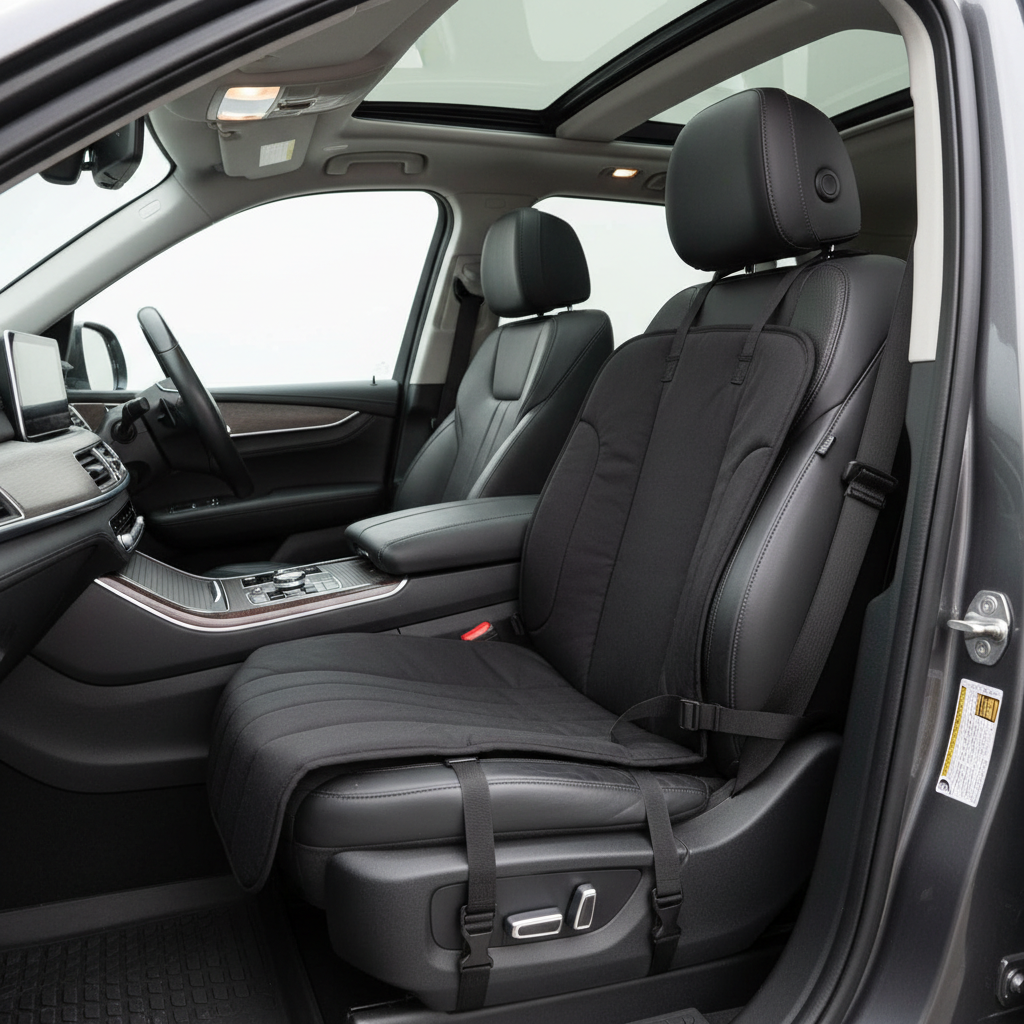
Mistakes I see people make (that waste money fast)
These are the common traps, especially when parents buy the first high-rated option and assume it will “just work.”
- Buying for aesthetics and ignoring grip, shiny mats often slide more on leather.
- Overloading pockets, then wondering why the protector sags into the kick zone.
- Installing too high, kids kick lower than you expect once the ride starts.
- Skipping strap re-tightening after a few days, minor stretch is normal.
- Using harsh cleaners that damage coatings; mild soap and water is usually safer unless the manufacturer says otherwise.
Also, if you’re trying to stop kicking entirely, a protector won’t do that. It prevents damage. Behavior fixes and seat positioning are a separate conversation.
Conclusion: the best pick is the one that stays tight and wipes clean
The best car seat back protector for kids kicking is rarely the most expensive, it’s the one you can install tightly on your specific seats, that covers the real kick zone, and that you can wipe down in under a minute. If you want one quick rule, choose a textured, water-resistant mat with both top and bottom attachment points, then re-tighten after a week.
Action steps: check where your child’s shoes actually land today, then buy for that coverage and install it with tension. You’ll notice the difference the next time it rains.
FAQ
Do seat back protectors work on leather seats without sliding?
Many do, but leather is the toughest surface for sliding. Look for anti-slip backing and a bottom strap, then tighten both straps and re-check after a few drives.
Are car seat back protectors safe to use with a child car seat?
It depends on the car seat and how the protector is positioned. According to NHTSA, follow the car seat manufacturer’s instructions and avoid accessories that change the seat’s fit. If you’re unsure, a CPST can help confirm your setup.
What’s better for kids kicking: a full mat or a smaller panel?
For daily kicking, a full mat tends to stay flatter and cover more “misses.” Smaller panels can work, but they need strong anchors to avoid shifting.
Do I need pockets on a seat back protector?
Only if you’ll use them. Pockets add weight and can sag, which matters if your main goal is preventing scuffs from shoes.
How do I clean a muddy seat back protector fast?
Let the mud dry a bit, brush off grit, then wipe with mild soap and water. Machine washing can help, but check the label since coatings and stitching vary by product.
My protector keeps sliding down, what should I do first?
Re-center it to the kick zone and tighten the top strap until the upper edge stays firm, then snug the bottom strap. If it still slides, you likely need more grip on the backing for your seat material.
Will a protector damage my upholstery?
Most won’t, but trapped grit can scuff, and some materials may transfer dye in heat. Cleaning the seat back before install and choosing a reputable, colorfast material reduces risk.
If you want a simpler path
If you’re trying to keep a lease return clean, or you’re just tired of wiping scuffs every weekend, it may help to choose a strap-stabilized, wipe-clean protector designed for heavy kicking and pair it with a quick monthly check for strap tension, it’s the low-effort routine that keeps the “protector” part actually working.