
Best car storage boxes for tools trunk shopping usually starts after the same annoying moment: you open the trunk, a socket set slides out, and the one tool you need is buried under everything else.
A good box system does more than look tidy, it saves time on the shoulder of the road, protects expensive tools, and reduces the chance of loose items becoming projectiles during a hard stop.
This guide breaks down what actually matters (fit, access, and durability), a quick self-check to pick the right style, and a practical trunk layout you can copy without overthinking it.
What makes a tool storage box “best” for trunk organization
For most drivers, the “best” option is the one you will keep using after week three, meaning it fits your trunk, opens easily, and doesn’t require a perfect daily reset.
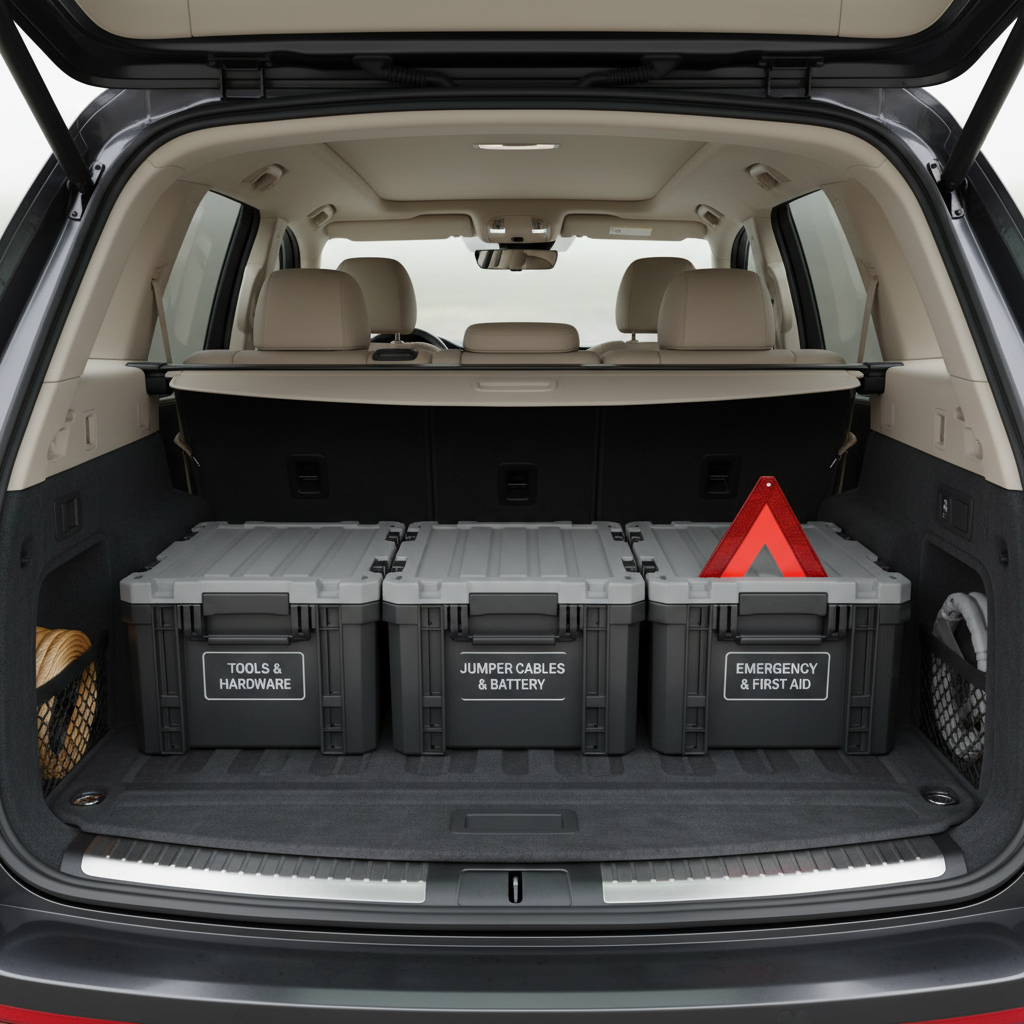
Focus on these features before brand names:
- Non-slip stability: grippy base, trunk anchors, or tie-down points so boxes don’t skate around.
- Latch quality: cheap latches pop open when the trunk hits bumps, that’s when “organized” turns into “exploded.”
- Access with one hand: if you need two hands and a flat surface to open it, you’ll stop using it.
- Right-size capacity: too small forces overflow, too large becomes a black hole.
- Weather tolerance: not “waterproof,” but able to handle humidity, road salt residue, and occasional spills.
According to NHTSA (National Highway Traffic Safety Administration), securing items in a vehicle helps reduce injury risk during sudden stops or crashes, so stability and tie-down compatibility are not just “nice to have.”
Common reasons your trunk tools keep getting messy
If you’ve tried a bin already and it failed, it usually isn’t because you “don’t have the discipline.” It’s because the system fights your real routine.
- One-container syndrome: everything goes into one big tote, which guarantees digging and dumping.
- No home for small parts: fuses, bits, zip ties, and gloves float around until they vanish.
- Awkward trunk geometry: spare tire hump, sloped floor, or side pockets that waste space.
- Mixed-use trunk: groceries, strollers, sports gear, and tools competing for the same real estate.
- Overpacking “just in case”: weight adds up and makes the box harder to move, so you stop putting things back.
Once you recognize which problem you have, picking the right best car storage boxes for tools trunk setup gets simpler, you’re matching the box to the behavior, not forcing yourself to behave like a toolbox catalog model.
Quick self-check: which storage style fits your situation
Use this as a two-minute filter before you buy anything.
- If you do roadside fixes (flat tire help, battery, quick repairs): prioritize fast-open latches and top access.
- If you carry power tools (drills, impact drivers): prioritize rigid walls and internal padding or dividers.
- If your trunk also hauls groceries: choose modular boxes that can be lifted out in seconds.
- If you live with snow/rain: choose tougher plastics and rust-resistant hardware, and avoid fabric-only systems.
- If space is tight (sedans, compact SUVs): favor stackable low-profile boxes over tall totes.
If you’re stuck between two styles, go with the one that makes “putting it back” easiest, that’s the habit that keeps trunk organization alive.
Types of car storage boxes for tools (and when each works)
There isn’t one universal winner, but there are clear winners by scenario.
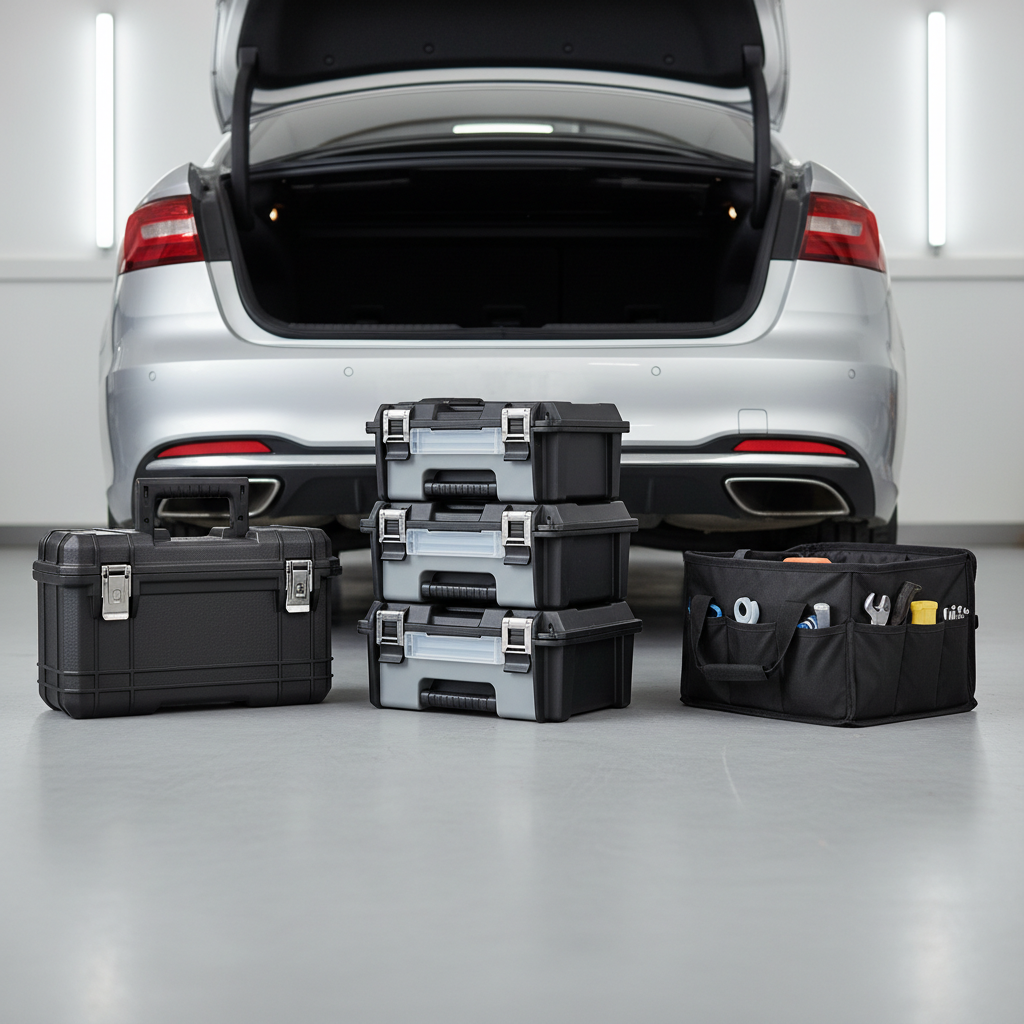
Rigid plastic toolboxes
Great for heavier tools and messy items (oily rags, tow straps). They stack well and usually have better latches.
- Best for: DIYers, tradespeople, power tools
- Watch-outs: can rattle, dividers matter, cheap hinges crack in cold climates
Modular stackable systems
These shine when you want a “grab one box and go” setup. You can keep one module as an emergency kit and another as a work kit.
- Best for: mixed-use trunk, people who move tools in/out often
- Watch-outs: height can block trunk visibility in smaller cars, check footprint
Soft trunk organizers with compartments
Useful for light tools, gloves, fluids, and the “support gear” around tools. They’re comfortable to carry and often include straps.
- Best for: everyday drivers who want order without heavy-duty boxes
- Watch-outs: corners collapse, fabric absorbs spills, not ideal for sharp metal tools
Drawer-style trunk storage (vehicle-specific)
More of an upgrade path than a first step. If you’re in a work vehicle daily, drawers reduce stacking and digging.
- Best for: frequent work use, fleet vehicles
- Watch-outs: cost, installation, and lost vertical space
Buying checklist + a quick comparison table
When you’re trying to decide what’s “best,” don’t guess, measure. Trunks vary, and even small differences change what fits.
- Measure the trunk floor: width between wheel wells, depth to seatback, and the height you can tolerate.
- Pick an access direction: lid opening up, side access, or removable top tray.
- Plan for small items: at least one small-parts organizer or removable tray.
- Look for tie-down compatibility: rings, D-loops, or strap slots.
- Check chemical resistance: if you carry oil, coolant, or cleaner, plastics usually handle this better than fabric.
| Storage type | Best use | Pros | Cons |
|---|---|---|---|
| Rigid plastic toolbox | Heavy tools, messy gear | Durable, secure latches, stackable | Can be bulky, may rattle |
| Modular stackable boxes | Grab-and-go kits | Flexible, scalable, organized by task | Can get tall, pricier |
| Soft trunk organizer | Light tools + accessories | Easy to carry, quick setup | Less protection, absorbs spills |
| Drawer system | Daily professional use | No digging, very tidy | Install effort, cost, weight |
Key takeaway: for most people, the “best car storage boxes for tools trunk” choice is a hybrid, one rigid box for tools plus one softer organizer for accessories and emergency items.
Practical trunk layout: a setup that stays organized
You can get a clean trunk without turning it into a museum. The trick is zoning: tools in one zone, emergency in another, and “dirty stuff” separated.
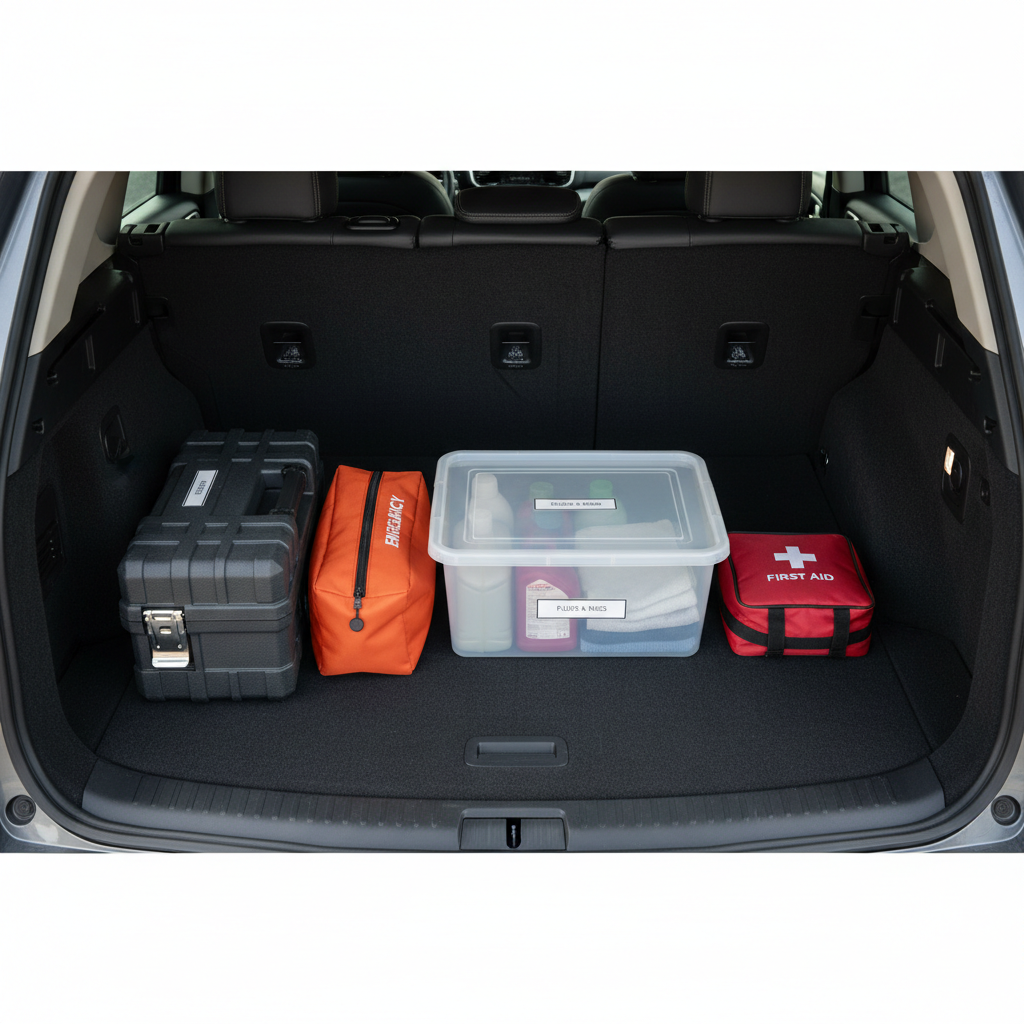
Step-by-step layout
- Back row (closest to seatbacks): heavier rigid box with primary tools, this reduces sliding.
- Side pocket or corner: gloves, flashlight, and small parts, items you grab often.
- Front edge (closest to trunk opening): jump starter or cables, tire inflator, reflective triangles, fast access matters.
- Dirty containment: a small bin for rags, fluids, and used gloves, so leaks don’t contaminate the rest.
If your trunk has tie-down points, use a simple strap to keep the main tool box from shifting, especially if you drive on uneven roads or carry heavier equipment.
Mistakes to avoid (these waste money fast)
Some trunk organization problems don’t need a new product, they need one correction.
- Buying too big “to grow into”: big boxes become clutter magnets, and you lose the benefit of compartmentalization.
- Ignoring noise: metal-on-plastic rattles make people stop using the system, add foam liners or choose padded dividers.
- Storing liquids without a secondary tray: even “sealed” bottles can seep, a cheap drip tray saves the trunk carpet.
- Loose sharp tools: if you carry blades or picks, add sheaths, or use a small internal case.
- Over-optimizing: color-coded labels are fun, but if it slows you down, it won’t stick.
According to AAA, keeping a basic emergency kit in your vehicle is commonly recommended for breakdown readiness, so if you’re organizing tools anyway, it’s a good moment to separate “repair tools” from “safety and help items.”
When to consider professional help or a different approach
If you’re regularly carrying very heavy gear, hazardous chemicals, or jobsite equipment, it may be worth asking a professional upfitter or a qualified installer about vehicle-specific storage, load limits, and safe mounting points.
Also, if you’ve had a recent crash or notice trunk floor damage, it’s smart to have a mechanic or body shop check tie-down areas before you bolt anything down. Safety guidance varies by vehicle design and warranty terms.
Conclusion: picking the right boxes, then keeping it simple
The best setups don’t chase perfection, they make it easy to put tools back where they belong. Start by measuring your trunk, choose one durable main box plus a smaller companion organizer, then lock in a two-zone layout you can maintain even when you’re tired.
If you want a quick next step, do this today: pull everything out, toss duplicates, and rebuild with one “roadside quick access” kit at the trunk edge. Your future self will thank you.
FAQ
What size should I buy for best car storage boxes for tools trunk organization?
Measure between wheel wells and decide how much height you can give up. In many sedans, two medium boxes are easier than one large tote because you can pull one out without unloading everything.
Are soft trunk organizers good enough for tools?
For light hand tools and accessories, often yes. If you carry metal tools with sharp edges or heavier power tools, a rigid box usually holds shape better and protects your trunk from damage.
How do I stop tool boxes from sliding in the trunk?
Look for boxes with rubber feet or add a non-slip trunk mat, then use existing tie-down points if your vehicle has them. If you don’t have anchors, consider a fitted organizer that wedges against the trunk walls.
Should I keep tools and emergency gear in the same container?
Usually no. Emergency items like a first aid kit, triangles, or a jump starter should be reachable fast, while tool boxes can sit deeper. Separating them prevents digging during stressful moments.
What’s the best way to organize small parts like fuses and bits?
A small clear organizer with adjustable dividers works well because you can see what’s missing. Keep it inside the main box or clipped to the organizer so it doesn’t roam the trunk.
Is it safe to store oil, coolant, or cleaners in the trunk?
Many people do, but leaks and fumes can happen, especially with temperature swings. Use sealed containers, add a secondary tray, and if you’re unsure about a specific chemical, check the manufacturer guidance or ask a professional.
How often should I reorganize my trunk tool setup?
A quick monthly reset is usually enough, and after any roadside use. The goal is simple: replace what you used and confirm everything is secured, not to redesign the whole system every time.
If you’re building a trunk setup from scratch and want a more low-effort path, start with one sturdy toolbox plus a compact organizer for emergency and small items, then adjust after two weeks of real driving instead of guessing upfront.