
How to check car engine oil quality without changing it usually comes down to three things you can do in your driveway: look at the oil’s condition, pay attention to how the engine behaves, and confirm the basics (level, mileage, and any warning signs).
If you drive in the U.S., your oil sees a wide mix of short trips, stop-and-go, heat, and sometimes long highway runs. That mix is exactly why oil can “look okay” yet still be worn out, or look dark but still be doing its job. The goal is not perfection, it’s making a good call on whether you can keep driving, top off, or schedule service soon.
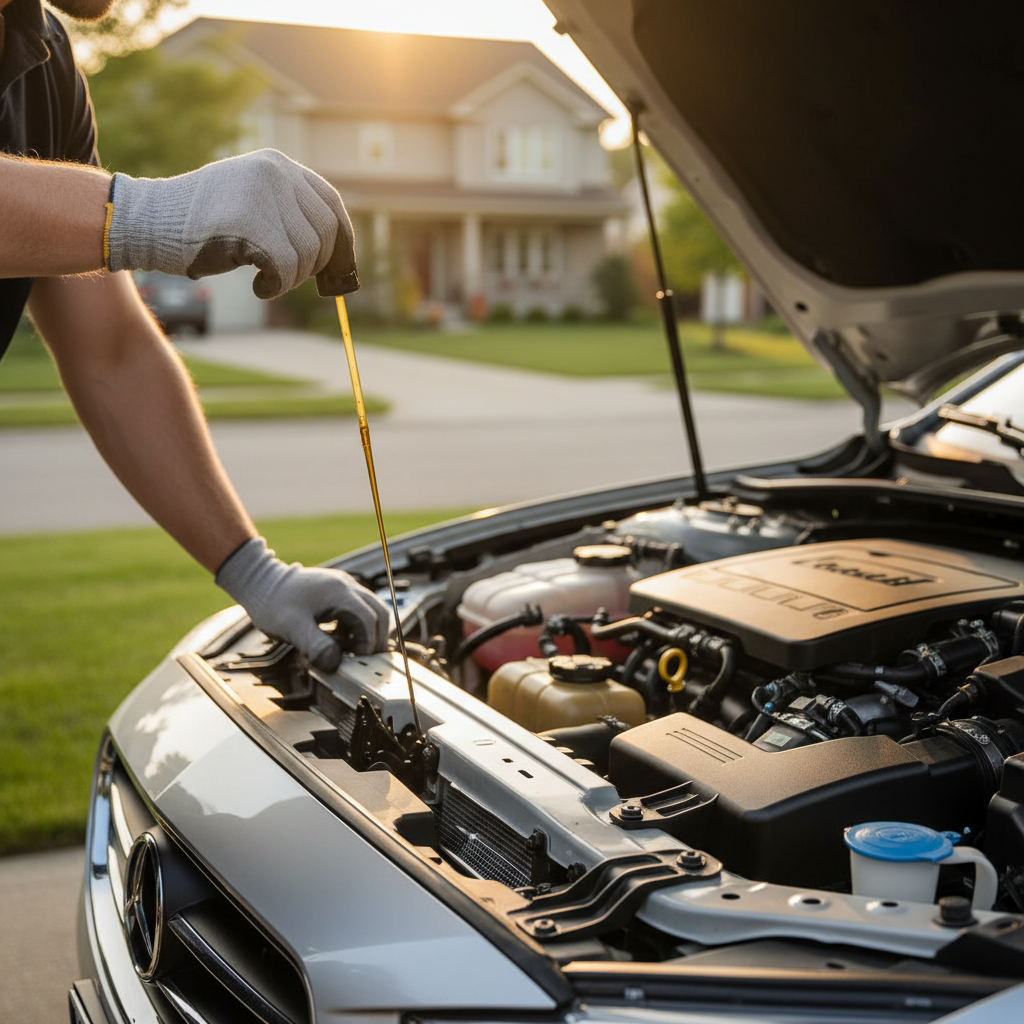
One quick expectation reset: color alone is not a lab test. Many oils darken quickly because detergents suspend soot and combustion byproducts, especially in direct-injection engines. But certain colors, smells, and textures can still tell you a lot, and that’s what this guide focuses on.
What “oil quality” really means (and why it degrades)
Engine oil is doing several jobs at once: lubricating, cooling, cleaning, and protecting against corrosion. When people say oil is “bad,” it’s usually one (or more) of these problems:
- Oxidation and heat breakdown: long intervals, high temps, towing, and turbo heat can thicken oil and reduce protection.
- Contamination: soot, fuel, coolant, dirt, and moisture can overload the additive package.
- Viscosity change: oil can get too thin (often from fuel dilution) or too thick (oxidation), both hurt lubrication.
- Additive depletion: detergents/dispersants and anti-wear additives get used up over time.
According to the American Petroleum Institute (API), engine oil performance depends on using the correct viscosity and service category for the vehicle, and on maintaining appropriate drain intervals for your operating conditions.
Quick self-check: are you in a “hard on oil” driving pattern?
Before you even touch the dipstick, it helps to classify your use. These patterns often shorten real-world oil life, even if the odometer miles look low:
- Most trips under 10 minutes (oil may not fully heat up, moisture and fuel can accumulate)
- Frequent idling, rideshare, delivery driving, heavy traffic
- Very hot summers, mountain driving, or towing/hauling
- Turbocharged engines driven hard or shut down immediately after heavy load
- Noticeable oil consumption between services
If you check multiple boxes, be more conservative when judging oil condition. In many cases, the right move is simply following the “severe service” interval in your owner’s manual.
Dipstick inspection: the at-home checks that actually help
For most cars, a clean dipstick check tells you the most with the least effort. Try to check when the car is on level ground and the engine is off. If you just drove, wait a few minutes so oil drains back to the pan.
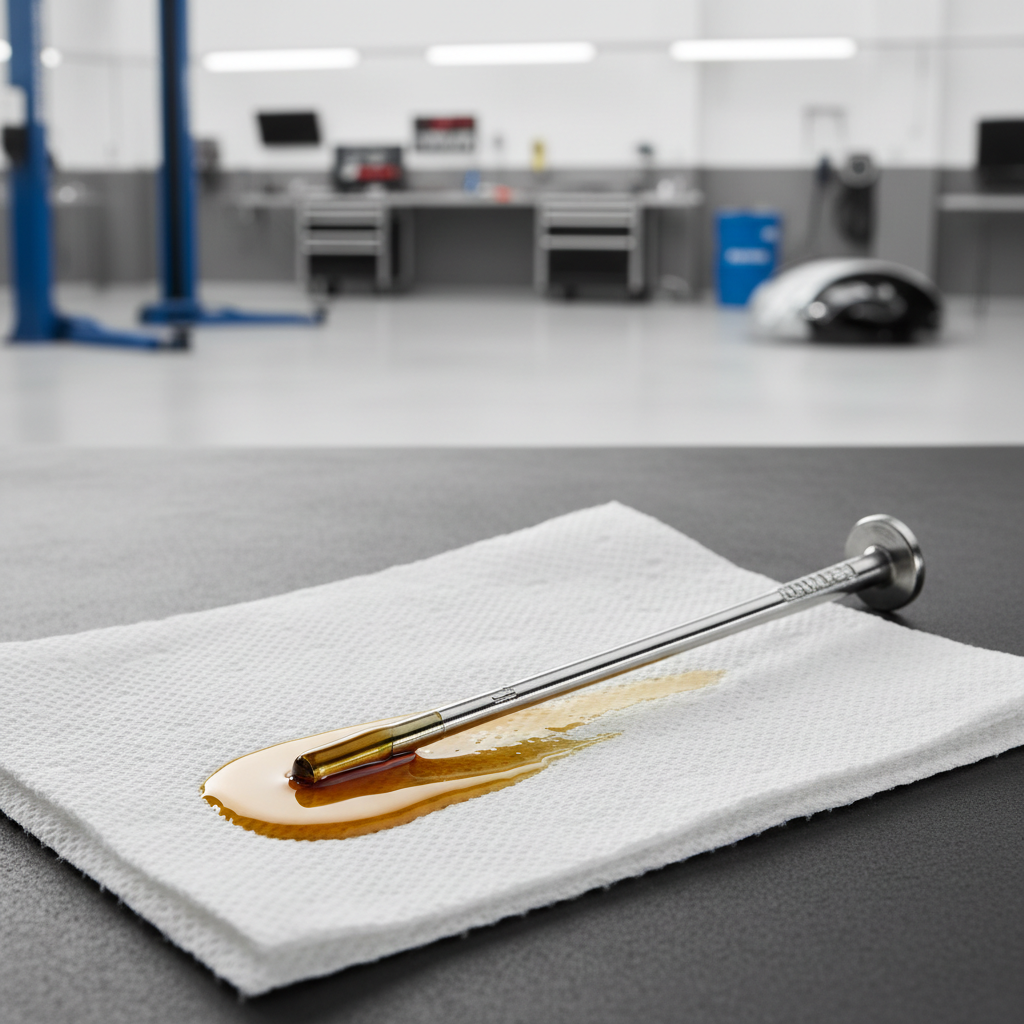
1) Level and consistency
Low oil can run hotter and degrade faster. If the level drops quickly, oil quality may also suffer because the remaining oil works harder. If you repeatedly need to top off, consider a professional inspection for leaks or consumption.
2) Color and transparency (use it as a clue, not a verdict)
Amber to dark brown is common. Pitch-black oil can be normal on some engines, but if it is also thick, gritty, or smells off, that’s different. Very light “milky” oil is never normal.
3) Smell test: fuel vs. burnt
If the dipstick smells strongly like gasoline, fuel dilution is possible, which can thin oil and reduce protection. A sharp burnt smell can suggest overheating or oxidation. Either case is a reason to shorten the interval and consider a shop check if symptoms persist.
4) Feel test (carefully): grit and sludge
Rub a tiny drop between your fingers with a paper towel. Oil should feel slick. If it feels gritty, there may be dirt ingestion or heavy wear debris. If it feels sticky with tar-like residue, sludge risk goes up, especially with long intervals and short trips.
5) Foam and bubbles
Foamy oil on the dipstick can come from overfilling, aeration, or sometimes coolant contamination. Don’t ignore persistent foam.
Red flags you should not “drive through”
Some findings are strong signals that the oil is contaminated or the engine has an underlying issue. If you see any of these, it’s usually smarter to stop guessing and get the car looked at.
- Milky/tan “coffee with cream” look on dipstick or under oil cap (possible coolant in oil)
- Rapid oil level rise (possible fuel dilution or coolant intrusion)
- Metallic sparkle in oil (possible abnormal wear)
- Low oil pressure warning or loud ticking/knocking
- Overheating paired with oil smell or smoke
According to the National Highway Traffic Safety Administration (NHTSA), warning lights indicate conditions that may affect vehicle safety or lead to damage if ignored, so it’s worth treating oil-pressure warnings as urgent.
Use this table to interpret what you see
This is a practical “driveway translation” of common observations. It won’t replace a lab analysis, but it helps you choose the next step.
| What you notice | What it can mean | What to do next |
|---|---|---|
| Oil is dark but smooth, level normal | Normal soot/additives doing their job | Follow your oil-life monitor or manual interval |
| Strong gasoline smell, oil seems thin | Possible fuel dilution (common with short trips) | Shorten interval, take longer highway drives; if ongoing, ask a shop to diagnose |
| Milky/tan oil or creamy residue | Possible coolant contamination | Limit driving, get professional inspection soon |
| Gritty feel or visible particles | Dirt ingress, heavy wear, or neglected oil | Change oil/filter, check air filter/intake sealing; consider an inspection |
| Burnt smell, very thick/sticky | Oxidation/overheating, extended interval | Change oil sooner, verify cooling system health and correct oil spec |
| Foam on dipstick | Overfill, aeration, or contamination | Recheck level, correct fill; if persistent, have it evaluated |
Practical steps: check oil quality without changing it
If you want a simple routine that’s repeatable, this works for most vehicles:
- Check at the same “state” each time: same parking spot if possible, similar engine temperature, wait a few minutes after shutdown.
- Wipe and re-dip twice: the first pull can smear oil from the tube and confuse the read.
- Use a white paper towel: color, grit, and cloudiness show up better than on the dipstick alone.
- Write down three notes: level, smell (normal/fuel/burnt), and appearance (clear/dark/cloudy/foamy).
- Cross-check with your interval: miles, months, and your driving pattern matter as much as what you see.
If your car has an oil-life monitor, treat it as one input, not a permission slip to ignore obvious contamination. According to many automakers’ guidance summarized by the Society of Automotive Engineers (SAE) publications, oil-life algorithms estimate degradation based on operating conditions, but they can’t directly “sense” coolant contamination or a mechanical fault.

Common mistakes that lead to wrong conclusions
A lot of “my oil is bad” calls are really measurement errors or assumptions. These are the big ones to avoid:
- Judging only by darkness: modern oils can turn dark quickly and still protect well.
- Checking right after shutdown: oil can be splashed up the engine and give a false high or odd look.
- Overfilling after a low reading: too much oil can aerate and cause foaming; add small amounts and recheck.
- Ignoring the filter: a clogged/cheap filter can affect how clean oil stays, even if the oil brand is good.
- Mixing wrong viscosity/spec: topping off with a mismatched oil may affect performance; match the manual when possible.
If you’re frequently topping off, the oil may look “newer” than it really is because you keep adding fresh oil. That’s not necessarily bad, it just makes visual judging less reliable.
When it’s worth getting professional help (or a lab test)
Most drivers don’t need laboratory analysis, but it can be useful if you’re extending intervals, maintaining a high-mileage vehicle, or tracking a suspected issue. Consider a shop visit or oil analysis if:
- You suspect coolant intrusion (milky oil, unexplained coolant loss)
- You smell strong fuel repeatedly, especially with rough idle or misfires
- Oil pressure warnings occur, even briefly
- You see recurring metal glitter or abnormal engine noise
- You want to safely adjust intervals for towing, track days, or fleet use
According to the U.S. Environmental Protection Agency (EPA), proper vehicle maintenance helps reduce emissions and waste; in practice, that usually means changing oil based on real operating conditions rather than stretching intervals blindly. A qualified mechanic can also check for PCV issues, injector problems, or cooling-system leaks that a dipstick check cannot confirm.
Key takeaways (the simple decision guide)
- If level is normal, oil looks uniform, no odd smell: you can usually keep driving and follow the recommended interval.
- If oil smells like gas or seems unusually thin: shorten the interval and watch for drivability issues, ask for diagnostics if it repeats.
- If oil is milky, foamy, or glittery: limit driving and get it inspected soon, those signs can point to bigger problems.
- If you do lots of short trips: be conservative, your oil often ages faster than the miles suggest.
Conclusion: how to check car engine oil quality without changing it is less about a single “good/bad” sign and more about stacking small clues: dipstick condition, smell, consistency, and your driving pattern. If anything looks like contamination, treat it as a mechanical question, not just a maintenance reminder.
If you want a practical next step, set a 30-day reminder to recheck and compare notes, and if a red flag shows up, schedule a quick inspection before it turns into an expensive guess.
FAQ
- How to check car engine oil quality if the oil is black?
Black oil can be normal, especially in engines that keep contaminants suspended. Focus on texture, smell, and any foam or cloudiness, plus how close you are to the service interval. - Can I tell oil life by rubbing it between my fingers?
You can catch obvious grit or sludge, but you can’t reliably judge additive depletion or viscosity shift by touch alone. Use it as a screening check, not a final answer. - What does it mean if my oil smells like gasoline?
It may indicate fuel dilution, which can thin oil and reduce protection. Short trips are a common contributor, but persistent fuel smell is worth having a professional diagnose. - Is milky oil always a blown head gasket?
Not always, but coolant contamination is a serious possibility. Because the cause varies by vehicle, it’s safer to reduce driving and get an inspection. - How often should I check engine oil quality between changes?
Many drivers do fine checking monthly and before long road trips. High-mileage vehicles or cars that consume oil benefit from more frequent checks. - Does topping off oil “reset” oil quality?
Topping off helps maintain level and adds some fresh additives, but it does not fully restore oil that’s contaminated or heavily oxidized, and it won’t fix an underlying leak or engine issue. - Should I trust the oil life monitor over the dipstick?
Use both. The monitor estimates degradation based on operating conditions, while the dipstick can reveal contamination signs the monitor can’t detect.
If you’re trying to extend intervals, dealing with recurring fuel smell, or you just want a more confident answer than “it looks dark,” an oil analysis kit or a trusted local shop inspection can be a more time-efficient way to confirm what your dipstick hints at.