
best car trash bags for leak proof usually come down to three things: the right size for your car trash can, a material that resists punctures, and a closure that actually stays shut when the bag shifts in the footwell.
If you’ve dealt with a mystery coffee drip, melted ice, or takeout sauce seeping into carpet, you already know why “close enough” liners don’t cut it in a vehicle. Cars bounce, tip, heat up, cool down, and all of that turns a weak bag into a slow leak.
This guide helps you choose liners that match real car messes, not just a “leak proof” label. You’ll get a quick fit checklist, a comparison table, and a few practical setups that keep cleanup boring, which is the goal.
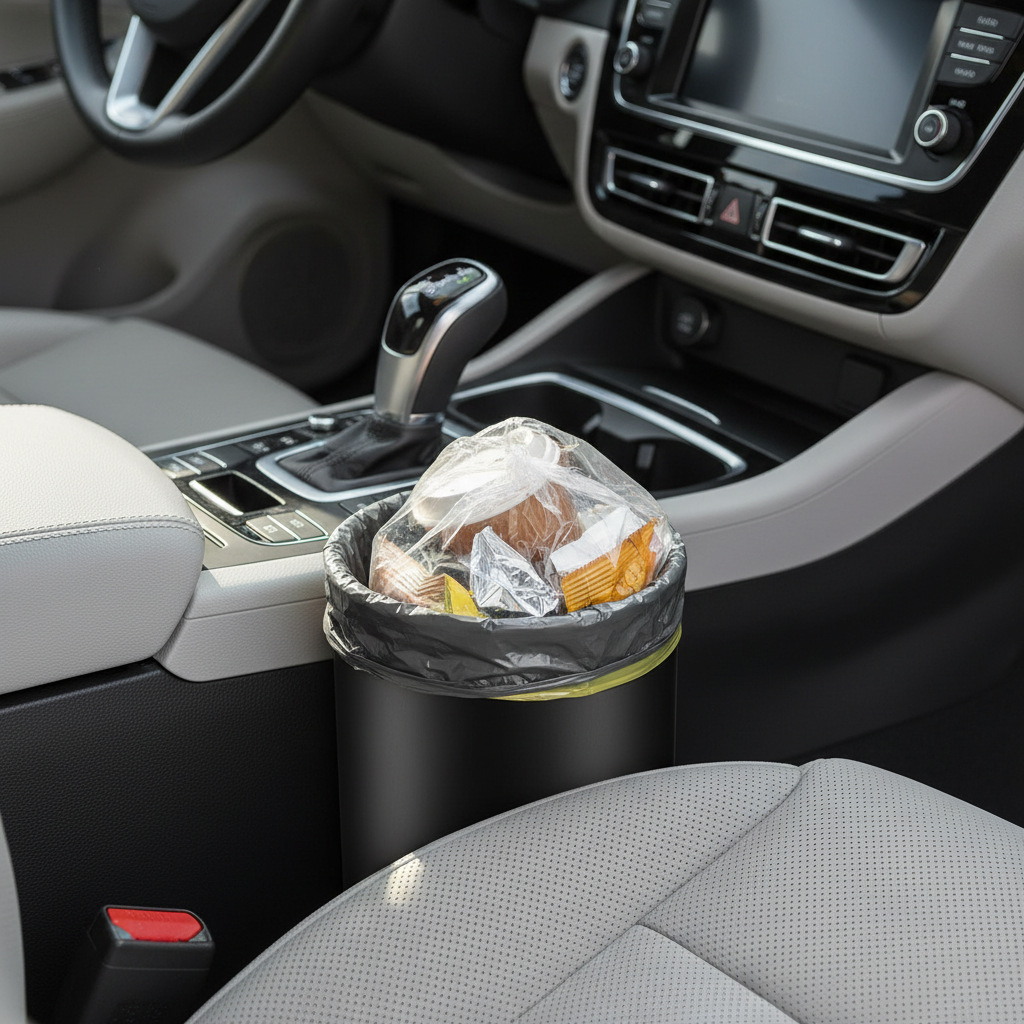
What “leak proof” really means in a car
In home use, leaks often come from liquid weight. In a car, leaks often start with tiny punctures and motion, a straw pokes a hole, a fast-food container corner rubs through, or a half-full bottle tips and keeps pushing liquid at one seam.
So when you’re shopping, it helps to translate marketing language into features that matter in a moving vehicle:
- Liquid barrier: the film should resist seepage, especially around seams.
- Puncture resistance: thicker isn’t always better, but very thin film tears easily around sharp trash.
- Closure integrity: drawstrings or strong flaps reduce slosh and odor escape when you carry the bag out.
- Heat tolerance: bags can soften in hot cabins, and “stretchy” film may sag off the rim.
According to the U.S. Environmental Protection Agency (EPA), plastics can be affected by heat and sunlight over time, which is a nice reminder that your liner needs to hold up inside a hot vehicle, not just in a cool kitchen.
Common reasons car trash bags leak (even when the bag says it won’t)
Most leaks aren’t mysterious, they’re predictable. These are the patterns people run into, especially with small car trash cans hung from a headrest or tucked in a door pocket.
- Wrong size: a bag that’s too small rides down into the can, then liquid hits the rim and escapes; too large bunches, creating weak creases that split.
- Thin film + sharp items: straw tips, broken plastic forks, can tabs, and receipt staples can start pinholes.
- Weak seams: bottom seals fail when weight shifts side-to-side during turns.
- No stable rim grip: if the liner slips, the “bucket” effect disappears and liquid finds upholstery fast.
- Condensation: iced drinks sweat, the bag looks fine, but the outside of the cup wets the liner surface and everything slides.
Also, “leak resistant” sometimes just means the film is intact, not that it will survive punctures. In cars, punctures are the real villain.
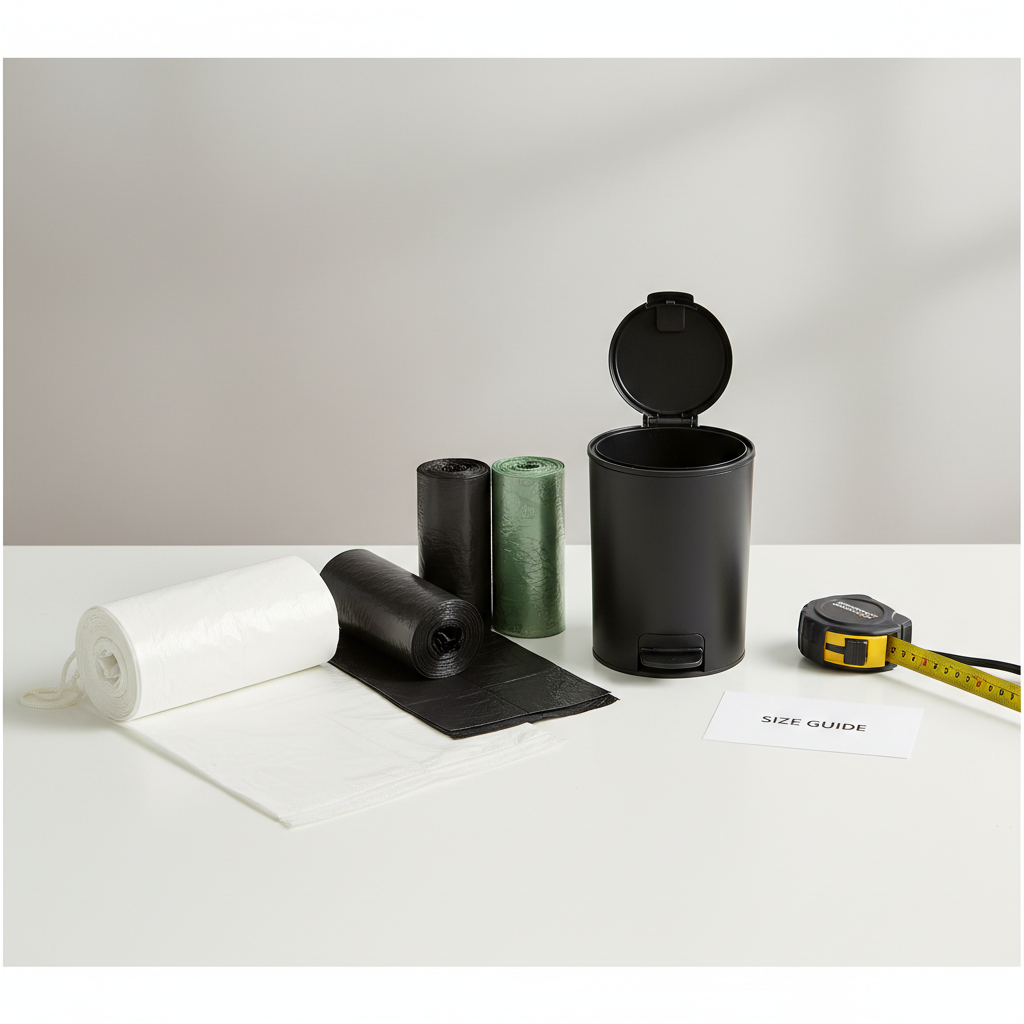
Quick self-check: which bag type do you actually need?
Before you buy a 200-count box, take 60 seconds and classify your car trash. This helps you avoid paying for “contractor tough” when you really just need the right fit.
1) Your car trash can style
- Hanging headrest bin: needs strong rim grip or drawstring, because gravity works against you.
- Cup-holder can: needs a narrow base fit so the liner doesn’t bunch and lift the can out.
- Door-pocket bin: needs puncture resistance, because items press against the sides while driving.
- Floor mini bin: can use slightly larger bags, but prioritize a closure that won’t spill during carrying.
2) Your typical “wet trash” level
- Mostly dry: receipts, wrappers, tissues, snack bags.
- Occasional wet: half-finished drinks, fruit peels, takeout containers.
- Frequent wet: kids, road trips, coffee runs, rideshare driving, or meal breaks in the car.
3) Your tolerance for smell
If you forget to empty the bin for a few days, look for a bag that closes cleanly and fits snug, because odor often escapes from the top gap, not through the plastic.
Comparison table: what to look for in the best options
Instead of recommending a single “winner” for everyone, here’s a practical buying grid. Use it to compare any brand you’re considering.
| Feature | Why it matters in cars | Good for | Watch-outs |
|---|---|---|---|
| Drawstring closure | Stays on rim, carries out with less spill risk | Hanging bins, frequent wet trash | Can be bulky on tiny cans if oversized |
| Star-seal / reinforced bottom | Reduces bottom seam failures when shifting | Floor bins, heavier loads | Not all listings clearly state seal type |
| Thicker film (higher gauge) | Better puncture resistance for sharp trash | Road trips, kids, rideshare | Too thick can fit poorly in tiny cans |
| Exact-fit “small can” size | Prevents slipping and bunching | Cup-holder cans, console bins | Cheap exact-fit bags can still have weak seams |
| Scented | Can help mask odors short-term | Occasional wet trash | Scent may bother sensitive passengers |
Practical picks by scenario (what usually works)
When people search best car trash bags for leak proof, they often want a shortcut. This is the closest honest shortcut: match the liner style to your mess profile, then confirm sizing.
Scenario A: Commuter, mostly dry trash
- Look for small-can liners with a reliable rim grip (drawstring optional).
- Medium thickness is usually enough, focus on fit so the bag doesn’t collapse.
- If you carry coffee, keep a small “liquid rule”: lids on, cups upright, and toss liquids at the destination.
Scenario B: Kids, snacks, and mystery liquids
- Prioritize puncture resistance and a reinforced bottom seal.
- Pick a bag that cinches shut, you’ll carry it out one-handed while wrangling seats.
- Consider double-bagging only for messy days, because doing it daily gets wasteful fast.
Scenario C: Rideshare or delivery driving
- Use drawstring bags that remove cleanly and don’t drip on the way to a bin.
- Keep a spare roll in the glove box and a couple of absorbent napkins for emergency containment.
- Swap liners more often than you think you need, odors build slowly, then suddenly feel permanent.
Scenario D: Road trips and long weekends
- Go slightly larger than your can volume to avoid overfilling and rim slip.
- Choose thicker film, because trash gets compressed and sharper over time.
- Bring a few “wet-item rules”: sauce containers closed, fruit sealed, melted ice dumped at stops.
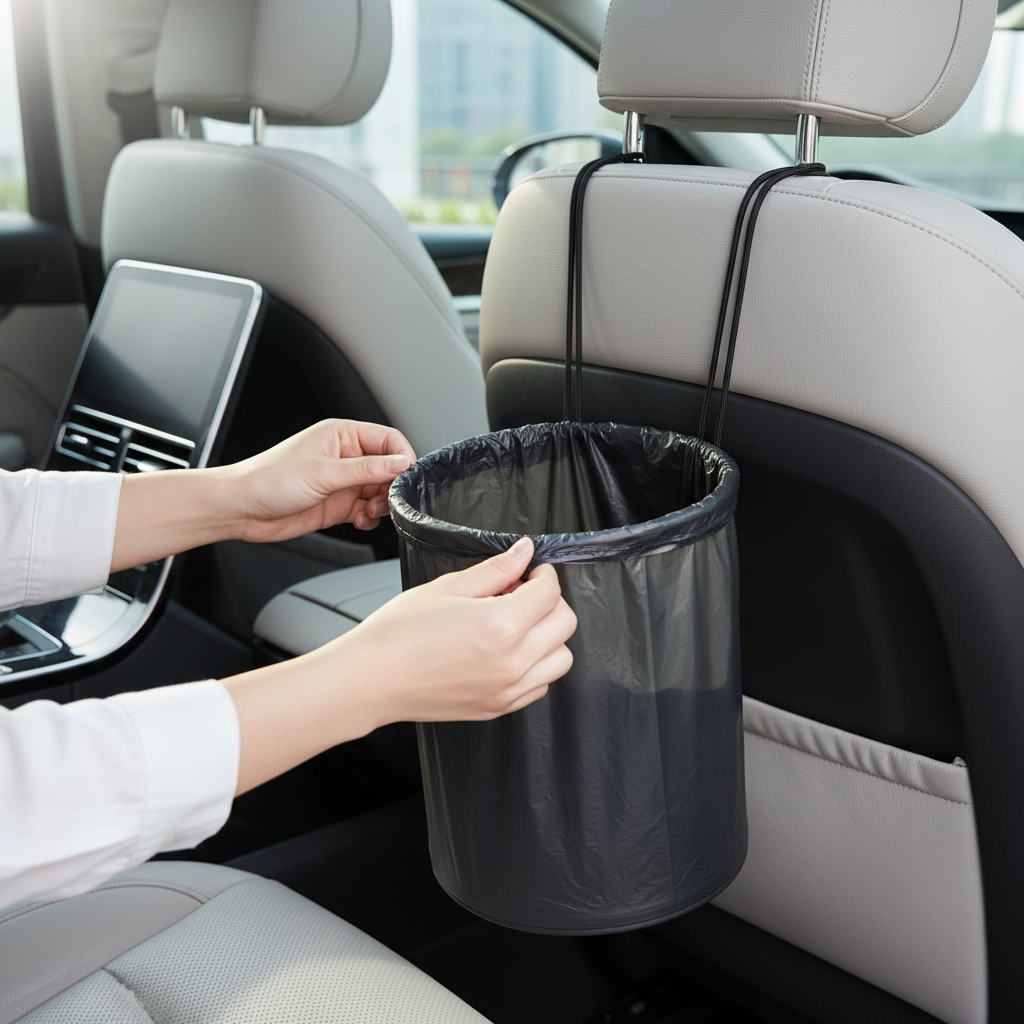
How to size and install a car trash bag so it won’t leak
A great liner can still fail if it’s installed like a loose grocery bag. Aim for tension and coverage, not extra slack.
Step-by-step sizing
- Measure the can: height and rim circumference matter more than “gallon” labels.
- Choose a bag width: flat width should be wide enough to wrap the rim without stretching thin.
- Choose a bag length: enough to reach the bottom plus a few inches for folding over the rim.
Installation that holds
- Fold 1–2 inches of the bag over the rim, a clean cuff grips better than a scrunched edge.
- If your can has an inner ring, trap the cuff under it, that single detail prevents 80% of “bag slide” issues.
- For hanging bins, leave less slack so the bag can’t swing and slap against the shell.
Key point: if the liner regularly collapses into the can, you’re not in a “need stronger bag” problem, you’re in a “wrong size or weak rim grip” problem.
Mistakes that waste money (and still leave you with leaks)
- Buying oversized bags to feel safer: extra folds create stress points and make it easier for the liner to slip.
- Relying on scent instead of closure: a tight close beats fragrance, especially for takeout and diapers.
- Overstuffing: in a small can, overfilling pushes sharp edges outward, punctures become likely.
- Ignoring “wet segregation”: tossing a half cup of ice into the bin is basically asking for seepage, dump liquids first.
According to the National Highway Traffic Safety Administration (NHTSA), loose items in a vehicle can become a safety issue in certain situations, so it’s smart to keep trash contained and secured, not rolling under pedals.
When you should upgrade beyond “better bags”
Sometimes the liner is fine, and the container is the weak link. Consider changing your setup if any of these stay true after you switch to best car trash bags for leak proof choices that fit properly:
- Your can has no rim or ring to hold a cuffed liner, so it keeps sliding.
- The bin tips easily in turns, so liquid pools against one seam.
- You regularly throw away wet or sticky trash, and the bin itself is hard to rinse.
In those cases, a more rigid, washable can with a locking lid often reduces both leaks and odor. If you’re dealing with persistent smell or possible mold in carpet after repeated spills, it may be worth consulting a professional detailer, because some situations need deeper cleaning than a wipe-down.
Conclusion: a leak-proof result is mostly fit + toughness + closure
The “best” option is the one that stays anchored to your car trash can, resists punctures from everyday junk, and closes cleanly when you’re carrying it out. If you do one thing today, measure your can and buy a small pack to test fit before you commit to bulk.
If you want the fastest win, pair a snug drawstring liner with a bin that has a real rim or retention ring, then keep liquids out of the trash whenever possible, that combo solves most car messes without overthinking it.
FAQ
What size trash bags work best for small car trash cans?
Most small car bins do better with “small can” or “bathroom” sizes, but labels vary. Measure the rim and height, then choose a bag that can fold over the rim with a little tension, not a lot of extra slack.
Are thicker bags always better for leak proof use?
Not always. Thicker film helps with punctures, but an oversized thick bag can bunch and slip, which can still lead to leaks. Fit and rim grip usually matter as much as thickness.
Do drawstring trash bags prevent leaks?
They help in two ways: they stay attached better on many bins, and they close tighter when you remove the bag. They won’t stop a puncture from a sharp object, so pairing drawstring with puncture resistance is the safer bet.
Why does my car trash bag keep falling into the can?
Usually the bag is too large or too narrow at the top, so it can’t hold a cuff on the rim. Try a size that matches the can circumference, or use a bin with an inner ring that locks the liner in place.
Are scented car trash bags a good idea?
They can be useful for mild odors, but some passengers find scents irritating. If you drive others often, a better closure and more frequent emptying is a more reliable approach.
How often should I change a car trash bag?
For mostly dry trash, a few days to a week may be fine. If you have wet trash or food, changing it more frequently helps prevent odor and seepage, especially in warm weather.
What should I do if liquid already leaked into the car carpet?
Blot first, then clean with an interior-safe cleaner appropriate for your material, and let it dry fully. If odor lingers or you suspect contamination, a professional detailer can advise on deeper extraction.
If you’re trying to keep a car trash can clean with minimal effort, a small drawstring liner that fits snug and a simple “no liquids in the bin” habit usually get you most of the way there, and it’s a lot cheaper than fixing smells later.