
Best car tire chains for small cars come down to three things most drivers don’t want to learn the hard way: correct sizing, enough clearance behind the wheel, and an install style you can actually handle in the cold. If you get those right, even an economy sedan or compact hatchback can gain real winter traction without turning your fender liner into confetti.
If you’ve ever tried to put chains on a small car in a parking lot while snow blows sideways, you already know the pain points: cramped wheel wells, frozen fingers, and the sinking feeling that you bought the wrong size. This guide stays practical, so you can choose a setup that fits your car and your patience level.
I’ll also flag the places where “small car” changes the decision, like low-clearance suspensions, ABS/traction control behavior, and manufacturer restrictions. According to NHTSA, drivers should reduce speed and use extra caution in winter conditions, and traction devices are a tool, not a magic shield.
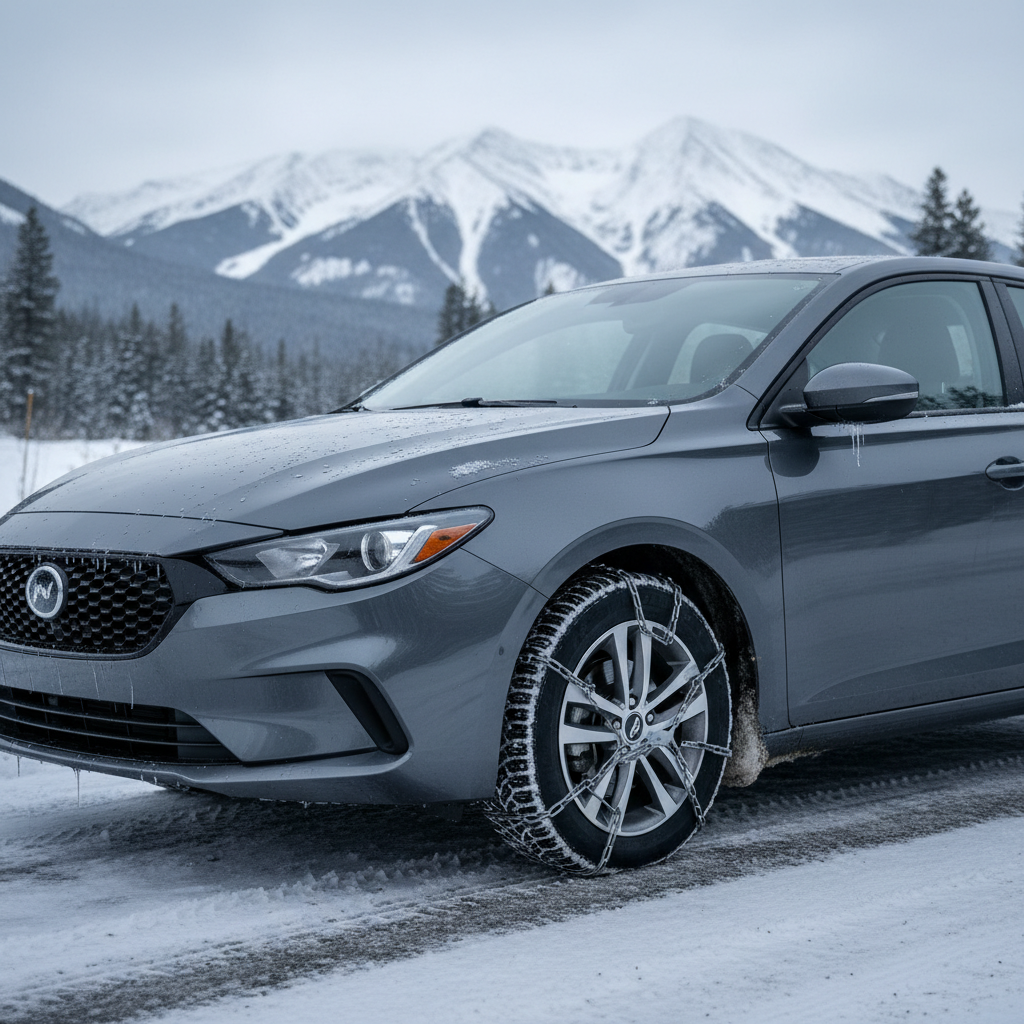
What makes tire chains different for small cars
Small cars usually have less space between the tire and suspension parts, struts, brake lines, and inner fender. That wheel-well clearance is the difference between “chains work great” and “chains slap the strut every rotation.” Many compact cars also run lower-profile tires, which can limit which chain styles fit safely.
Before you buy anything, check two things: your tire size (example: 195/65R15) and your owner’s manual. Some manufacturers allow chains only on certain tire sizes, or only on the front axle, or they require low-profile traction devices.
- Front-wheel drive compacts: chains typically go on the front tires.
- Rear-wheel drive small cars: chains usually go on the rear tires.
- AWD: many manuals still prefer one axle unless you can chain all four equally; follow the manual because driveline stress is real.
Chain types: what to buy if you want easy install
When people search for the best car tire chains for small cars, they often mean “what can I put on quickly and not regret.” In the U.S., you’ll mainly see three categories, and the install experience is very different.
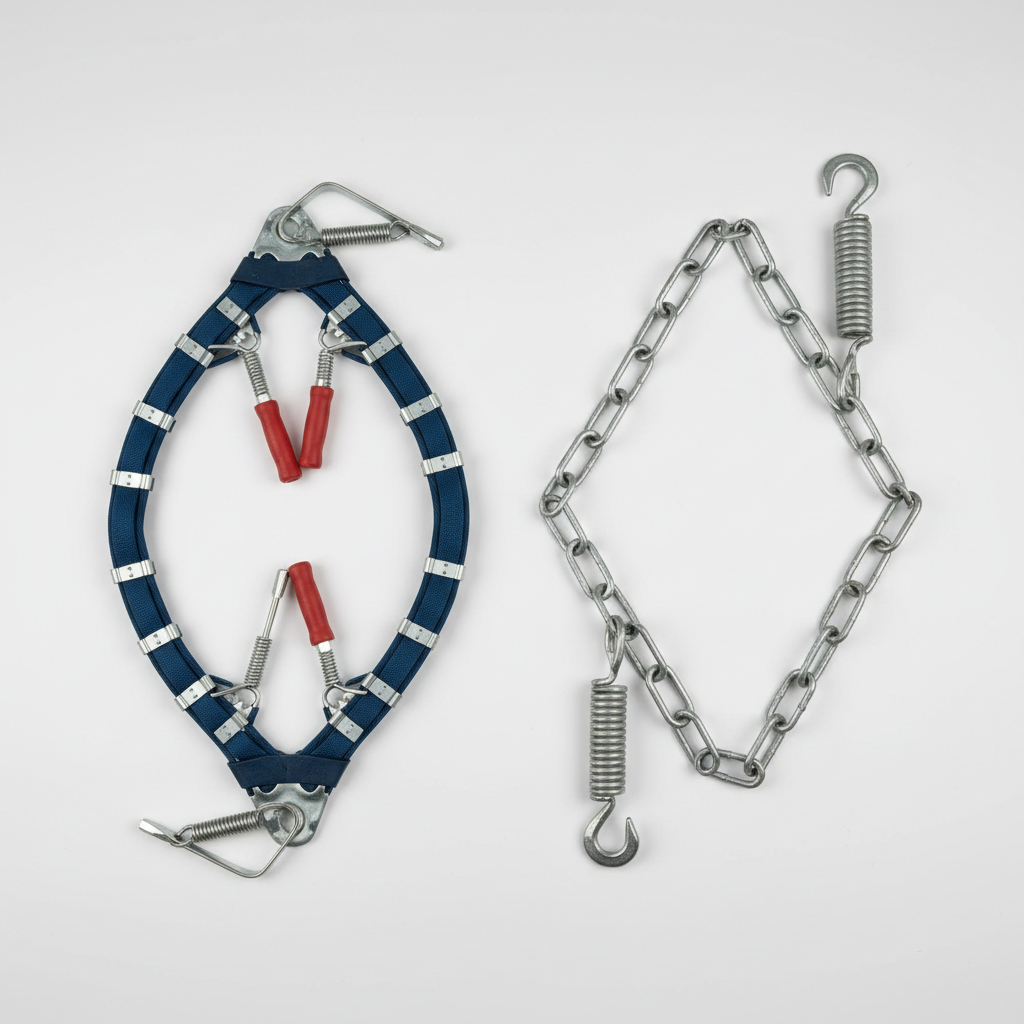
1) Cable chains (low-profile)
Cables sit closer to the tire, so they’re often friendlier to tight wheel wells. They’re usually lighter and simpler to handle, which matters when you’re crouched in slush. Tradeoff: they tend to wear faster and can offer less bite in deep snow compared with heavier link chains.
2) Traditional link chains (more traction, more bulk)
These are the classic “metal ladder” style. Great in deeper snow and for steep grades, but bulkier and more likely to clash with clearance on small cars. If your manual warns about clearance, this category might be a non-starter.
3) Chain alternatives (textile ‘snow socks’ or low-profile traction devices)
Textile devices can be very fast to install and often fit low-clearance cars. They can also be quieter. But durability varies a lot by road surface, and they may not satisfy every chain control requirement in every area. If you drive in states with chain control, confirm what’s accepted where you travel.
Quick fit checklist for small cars (avoid the wrong purchase)
This is the part most people skip, then pay for twice. Run this checklist before you click “buy.”
- Tire size match: the chain packaging must explicitly list your exact size.
- Owner’s manual rules: some small cars allow chains only on specific sizes, or require low-profile types.
- Clearance check: if you can, look behind the tire for tight gaps near strut/spring, brake hose, and inner liner.
- Chain control reality: if you travel in mountains, verify what your route enforces (some places distinguish chains vs cables).
- Your install tolerance: if you won’t practice at home, favor self-tensioning or simpler cable systems.
Practical rule: if your car has very tight clearance, low-profile cables or approved alternatives usually beat heavy link chains, even if the links look more “serious.”
Top picks by scenario (not one-size-fits-all)
Instead of pretending there’s one winner, here’s how to choose the best car tire chains for small cars based on where drivers actually get stuck.
| Scenario | What usually works best | Why it fits small cars | Watch-outs |
|---|---|---|---|
| Low-clearance compact (tight wheel wells) | Low-profile cable chains | Less bulk, less rubbing risk | Not ideal for long dry-road driving |
| Steep driveway, deeper snow, occasional use | Quality link chains if clearance allows | Strong bite when conditions get ugly | More install effort, more clearance demand |
| Emergency kit for city snow (plowed roads) | Cables with self-tensioning + rubber adjusters | Quick on/off, compact storage | Practice once so it’s not a surprise |
| “I need fastest install possible” | Textile traction devices (where permitted) | Lightweight and simple to mount | Durability varies, rules vary by region |
Easy-install steps that actually work in the real world
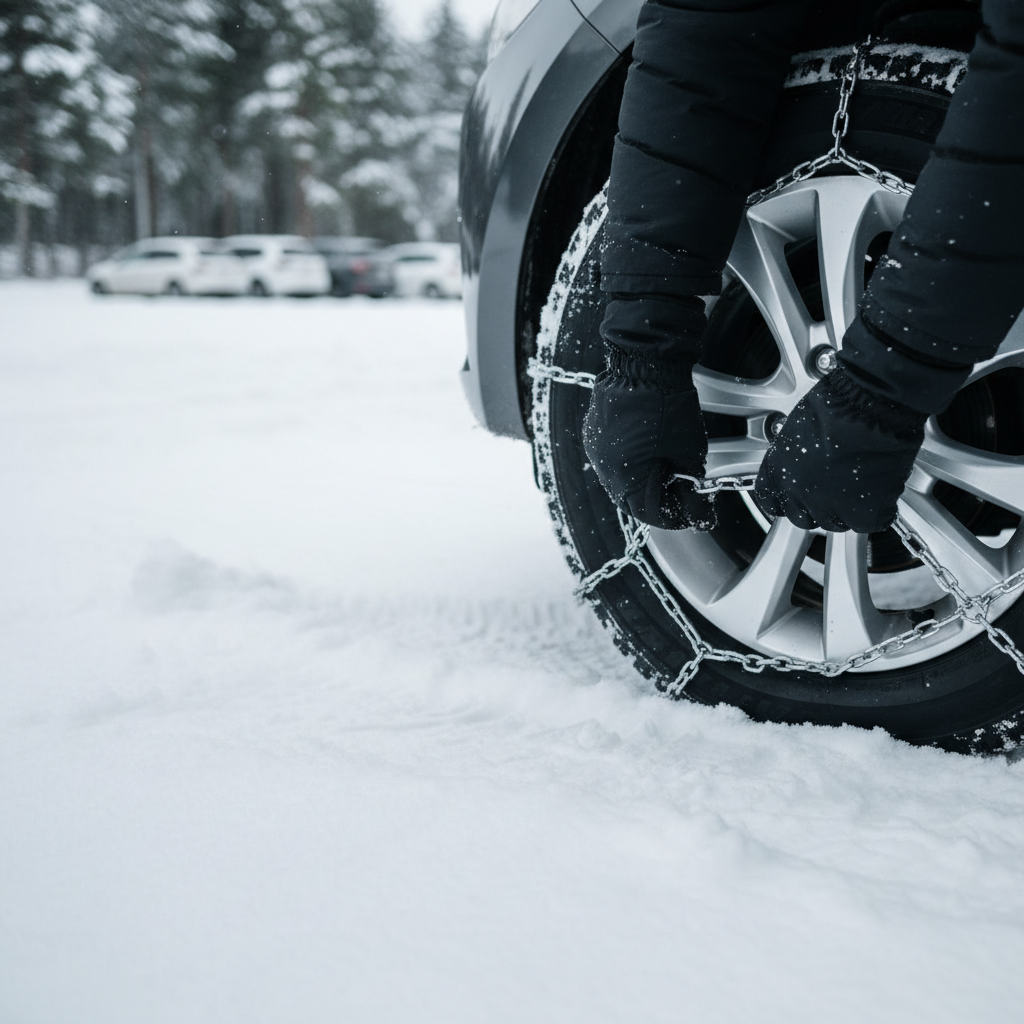
Even “easy install” chains feel annoying the first time, so do yourself a favor and practice in your driveway. The goal is to reduce surprises, not to become a chain expert.
Before you start
- Park off the roadway if possible, turn on hazards, set parking brake.
- Lay the chains out and untangle them fully, check for broken links or kinks.
- Wear gloves, kneeling pad helps more than people expect.
Typical cable/chain install flow
- Drape/position device evenly across the tire, making sure the “inside” connector reaches behind the wheel.
- Connect the inside first if required, then the outside, then tighten.
- Add tensioners if your kit uses them, they reduce flopping and rubbing.
- Drive 50–100 feet, re-check tightness and centering, then adjust.
Key point: if you hear consistent slapping, stop and re-seat. That sound is often clearance contact, and on a small car it can damage liners or brake components.
Safety, speed, and common mistakes (small cars get punished faster)
Chains change how the car behaves. Steering can feel heavier, ABS may chatter sooner, and the ride gets harsh. According to AAA, drivers should slow down and increase following distance in winter weather; with chains, that advice matters even more because traction becomes uneven if only one axle is chained.
- Speed: many chain makers recommend staying around 30 mph or less, but follow the specific product guidance and road rules.
- Dry pavement: avoid it when possible, it accelerates wear and can break links or cables.
- Wrong axle: putting chains on the non-drive axle often disappoints, and can hurt control on hills.
- Skipping re-tighten: the first short roll-out settles the chain, you need that re-check.
- Clearance denial: if your manual says “do not use,” treat it seriously, consider approved alternatives.
If you’re unsure about clearance or correct placement, a local tire shop can often confirm fit quickly. This is one of those situations where a ten-minute check can prevent a very expensive noise.
Key takeaways and a simple buying plan
If you want the best car tire chains for small cars, buy for fit and clearance first, then for traction level. Most compact-car owners end up happiest with low-profile cable chains or another low-clearance-approved option, plus a tensioning system that keeps everything centered.
- Do this today: confirm tire size and read the chain section in your owner’s manual.
- Do this once: practice installing at home, then repack with gloves and a kneeling pad.
When the weather turns, you’ll be glad you made it boring.
FAQ
What are the best car tire chains for small cars with tight wheel wells?
Low-profile cable chains are often the safer starting point because they reduce the chance of rubbing. Still, the owner’s manual matters more than internet advice, some cars restrict chain use entirely on certain tire sizes.
Do I need chains on all four tires for an AWD small car?
It depends on the vehicle and the device. Many manuals recommend chaining only one axle, while some conditions and products allow all four. If the manual warns about drivetrain stress or mismatch, follow that guidance or ask a shop.
Are “self-tensioning” chains worth it for easy install?
Usually yes, especially for occasional users. They reduce the fiddly tightening step and can help keep the chain centered, which is a bigger deal on small cars with limited clearance.
Can tire chains damage my small car?
They can, especially if installed loosely or if clearance is tight. Common damage points include fender liners and brake lines. If you hear repeated banging or see contact marks, stop and correct fit.
How fast can I drive with chains on a compact car?
Follow the chain manufacturer’s rating and local rules. Many products suggest staying around 30 mph or less, and slower is often smarter when roads are inconsistent.
Do snow socks count as chains in the U.S.?
Sometimes, but not always. Acceptance varies by state, road authority, and the specific chain-control level in effect. If you rely on them for mountain travel, verify the requirements for your route.
Should I buy chains bigger “just in case”?
No, sizing needs to match your tire exactly. Oversized chains can loosen and strike suspension parts, undersized sets can be impossible to latch in cold conditions.
If you’re trying to pick a set quickly, send your tire size, drivetrain (FWD/RWD/AWD), and what your owner’s manual says about chains, and you can narrow to a low-clearance-friendly option without guessing in the aisle.