
How to clean car floor mats comes down to two things: using the right method for the mat material, and not rushing the drying step. If you do those well, you can knock out most stains and odors without fancy tools or harsh chemicals.
Floor mats quietly collect everything—sand, salt, spilled coffee, pet hair—and once they get saturated, smells creep into the whole cabin. Many people try to “just spray and wipe,” but that usually spreads grime deeper or leaves moisture behind, which can lead to musty odor.
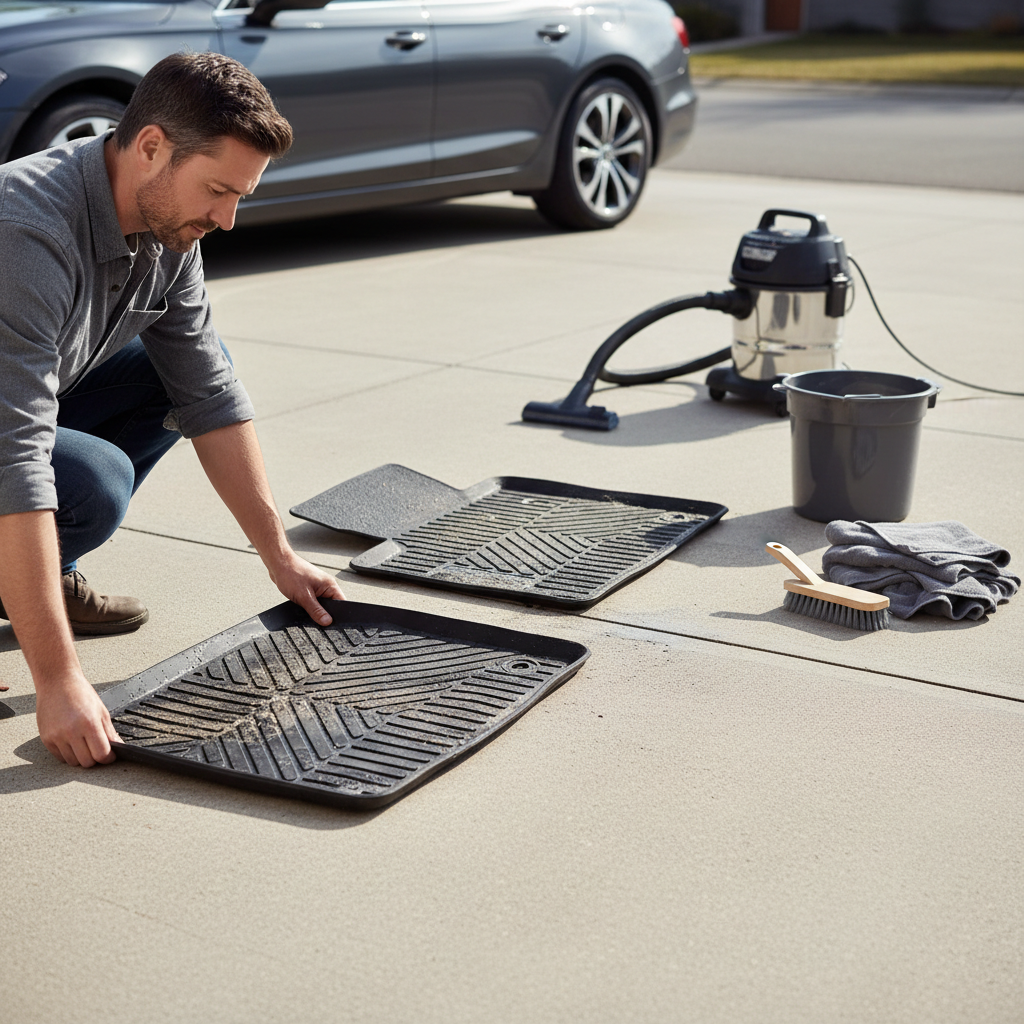
This guide separates rubber, carpet, and all-weather mats, gives quick “what should I do” checkpoints, and includes a simple table so you can choose a method that fits your time and mess level.
Start here: identify mat type and set up a no-mess workflow
Before you grab a cleaner, check what you’re dealing with. A good routine keeps dirt out of the car and prevents soaking the carpet underneath.
- Rubber / all-weather: molded channels, usually heavy, rinse-friendly.
- Carpet / fabric: fuzzy pile, more prone to stains and lingering odor.
- Hybrid: carpet insert inside an all-weather tray, treat as two materials.
Workflow that saves you time: remove mats, shake outside, vacuum both sides, then clean, then dry fully before reinstalling. According to the U.S. Environmental Protection Agency (EPA), improving moisture control helps limit mold growth indoors; cars are small “indoor” spaces too, so drying matters more than people expect.
Quick decision checklist (so you don’t over-clean or under-clean)
If you want the shortest path, use this mini self-check and match it to the method in the next sections.
- Loose dirt only: vacuum + light wipe, no soaking.
- Visible salt or sand: vacuum first, then rinse (rubber) or light shampoo (carpet).
- Sticky spills (soda, coffee): spot clean with mild detergent, then rinse/extract.
- Odor (musty, pet): deeper clean + odor neutralizer, and extend drying time.
- Grease: targeted degreaser, test small area first.
One practical rule: if the mat feels damp after “cleaning,” you are not done yet—especially for carpet mats.
Tools and products you actually need (and what to skip)
You can clean most mats with basic supplies. Specialty products help in specific cases, but they’re not mandatory.
Simple kit
- Vacuum with crevice tool
- Stiff nylon brush (rubber) and medium upholstery brush (carpet)
- Microfiber towels
- Bucket with warm water
- Mild dish soap or upholstery shampoo
Optional upgrades (worth it if you deal with salt, pets, or kids)
- Wet/dry shop vac or carpet extractor (best for pulling moisture out)
- Enzyme cleaner for organic odor sources (food, pet accidents)
- Rubber protectant labeled non-slippery
What to avoid in many cases
- Bleach on carpet mats: can discolor and weaken fibers.
- Oily dressings on driver mat: can create a slick surface underfoot.
- Pressure washer too close: can fray carpet edges and blast grit deeper.
How to clean rubber and all-weather mats (fast, low risk)
How to clean car floor mats made of rubber is usually the easiest job: remove, rinse, scrub, and dry. The main mistake is leaving cleaner residue in the channels, which attracts dirt again.
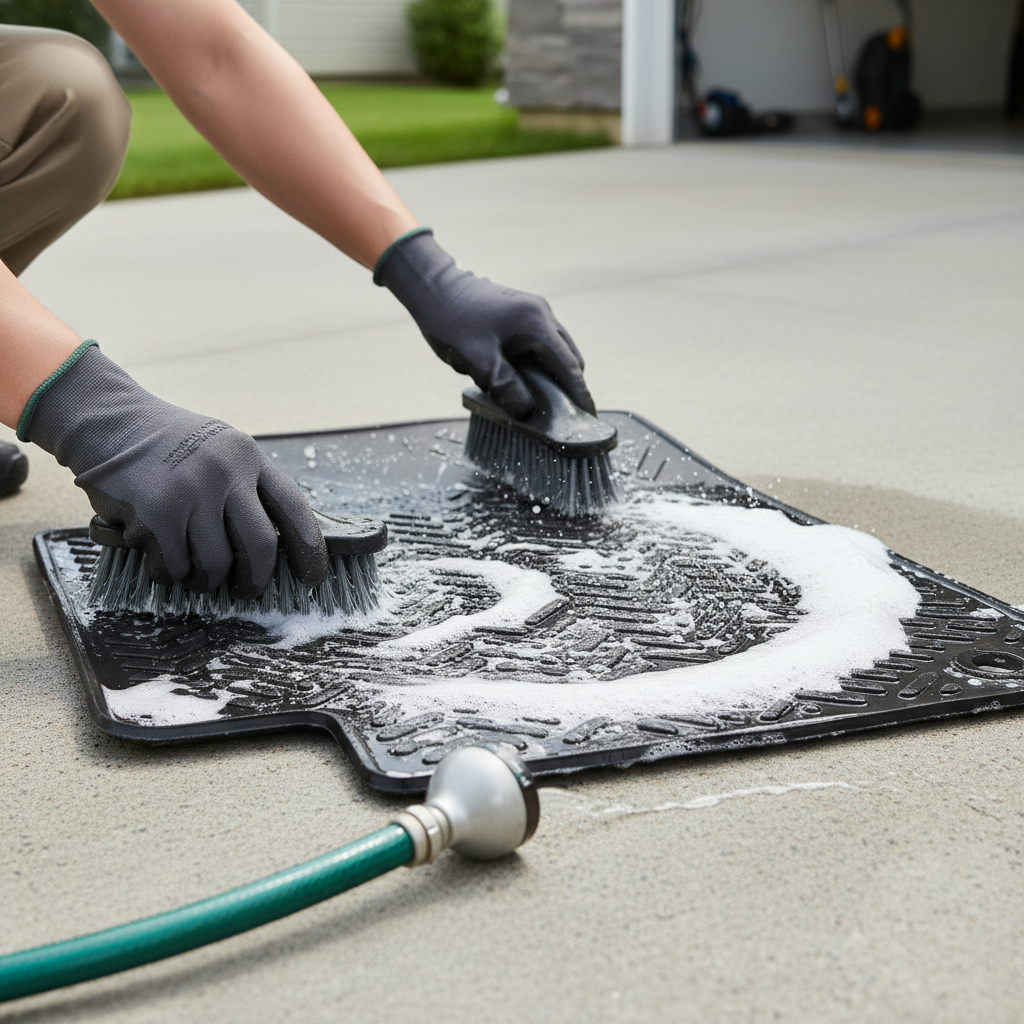
Step-by-step
- Rinse with a hose to remove grit (top and bottom).
- Mix warm water + a small amount of dish soap in a bucket.
- Scrub the channels and heel pad area, that’s where grime packs in.
- Rinse until water runs clear and no suds remain.
- Towel dry, then air dry standing up or flat in shade.
Salt tip (winter states): If you see a white crust, do a longer rinse first, then scrub. Salt left behind can keep attracting moisture and looks dirty quickly.
Optional finish: If you use a protectant, choose one that dries to a matte, non-greasy finish, and apply lightly. If the driver mat feels slick to the touch, wipe it back.
How to clean carpet and fabric mats (stains + odor without soaking)
Carpet mats need a different mindset: you want to lift soil and spills out, not push water in. A wet/dry vacuum helps, but you can still get good results with towels and patience.
Routine clean (most weekly/biweekly situations)
- Vacuum slowly in multiple directions, especially the edges.
- Lightly mist a diluted upholstery shampoo or mild soap solution, don’t drench.
- Agitate with an upholstery brush, short strokes work better than aggressive scrubbing.
- Blot with microfiber towels until they stop picking up dirt.
- Air dry completely before reinstalling.
Spot cleaning (coffee, soda, mud)
- Blot first, don’t rub, rubbing can spread the stain ring.
- Apply cleaner to the towel or brush, not straight onto the stain when possible.
- Rinse-light: wipe with a damp towel to remove soap residue.
- Dry with a clean towel, then air dry.
Odor strategy (musty, pet, food)
- Clean first, deodorizing without cleaning tends to mask.
- Use an enzyme cleaner if odor source is organic, follow label dwell time.
- Extract moisture with a shop vac if available, then extend drying time.
According to the Centers for Disease Control and Prevention (CDC), mold grows in damp environments; if your mats stay wet in the car, odor and mildew become much more likely. If you suspect mold sensitivity or respiratory issues, it may be worth consulting a professional detailer or a qualified remediation service.
Method picker table: match your mess to the right approach
Use this as a quick cheat sheet, especially if you’re deciding between a quick refresh and a deeper clean.
| Situation | Best method | Time | Risk to avoid |
|---|---|---|---|
| Light dust/sand | Shake + vacuum | 5–10 min | Skipping vacuum and wetting dirt into fibers |
| Road salt (rubber) | Rinse + soap scrub + rinse | 10–20 min | Leaving salty residue in channels |
| Food/drink spot (carpet) | Blot + spot clean + light rinse | 15–30 min | Over-wetting and creating a musty smell |
| Pet odor (carpet) | Clean + enzyme treatment + thorough drying | 30–60 min | Using fragrance-only sprays instead of removal |
| Grease/heel buildup | Targeted degreaser + brush + wipe | 15–25 min | Harsh chemicals that fade dye or weaken backing |
Drying and reinstalling: the step that decides whether it stays fresh
How to clean car floor mats is only half the job, the other half is getting them fully dry. Damp mats trapped in a closed cabin can turn “clean” into “smells weird” in a day or two.
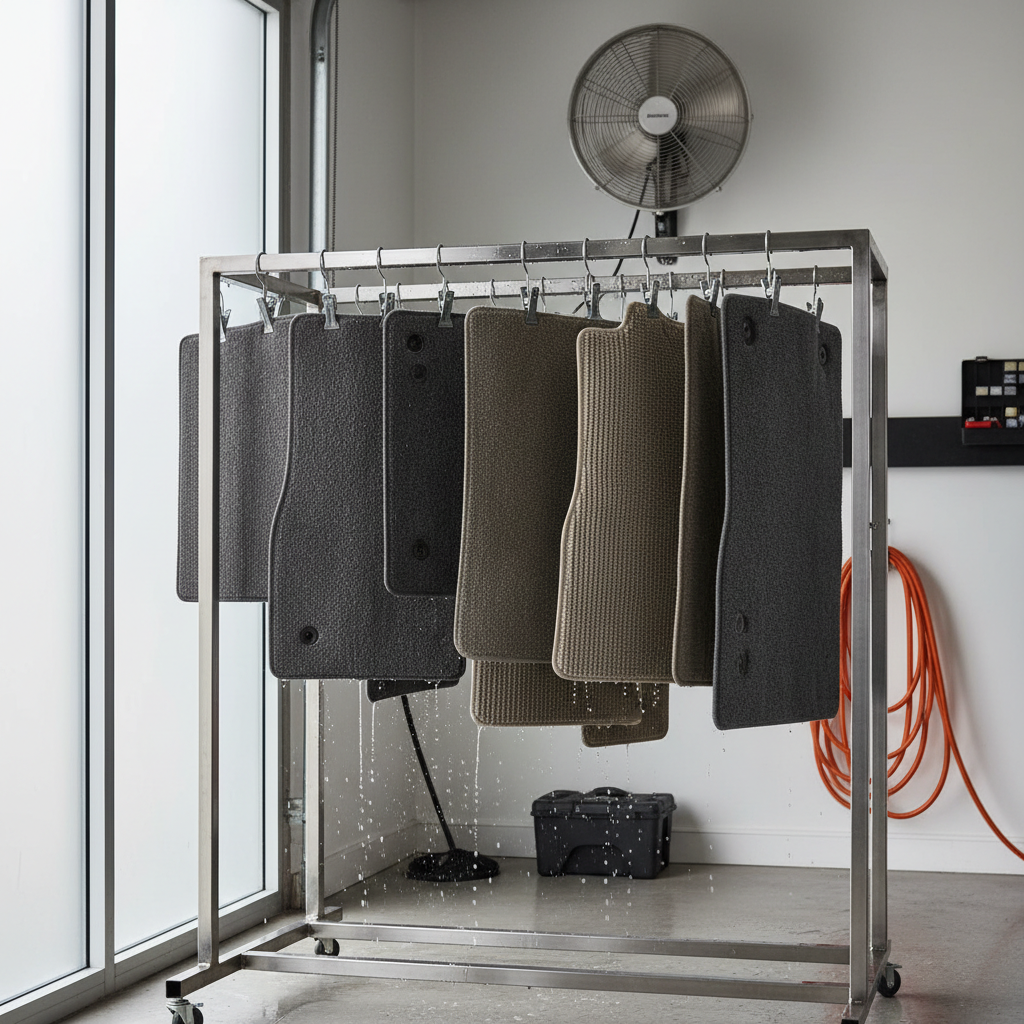
Drying key points
- Dry outside the car whenever possible.
- Use towels to press out moisture, then air dry in shade with airflow.
- If you must dry indoors, use a fan, and keep mats off the floor on a rack.
- Reinstall only when the backing feels dry and cool, not clammy.
Safety note: never place a loose mat on top of another mat in the driver footwell. According to the National Highway Traffic Safety Administration (NHTSA), unsecured or stacked mats can interfere with pedal operation. If your retention clips are missing or broken, replace them before putting mats back.
Common mistakes that make mats look dirty again
- Skipping the underside: dirt on the bottom grinds into carpet and migrates back up.
- Using too much soap: residue becomes a dirt magnet, especially on rubber.
- Cleaning in direct hot sun: cleaners can dry too fast and leave spotting.
- Over-wetting carpet mats: the pad/backing holds water longer than the surface.
- Masking odor with fragrance: it often returns once humidity rises.
Key takeaway: a “lighter clean more often” routine usually beats an occasional deep soak, it’s easier on materials and easier on your time.
When it’s worth getting professional help
If stains keep returning, the issue may sit under the mat, in the vehicle carpet or padding. A pro detailer can extract deeper moisture and address odor sources more effectively.
- Persistent musty smell after multiple dry cycles
- Suspected mold growth, especially after water intrusion
- Heavily soiled work-truck mats with embedded oil/chemicals
- Luxury carpet mats where color transfer or fiber damage is a concern
If you have asthma, allergies, or other sensitivities, it may be safer to consult a professional rather than experimenting with strong chemicals in a confined cabin.
Practical wrap-up (what to do this weekend)
Clean mats don’t require a big production, but they do require the right method and real drying time. Remove the mats, vacuum with intent, clean based on material, then dry until there’s no hidden dampness.
If you want a simple plan: do a 10-minute vacuum and shake weekly, then do a more thorough wash or shampoo monthly, adjusting for weather, pets, and how much you drive.
Action step: pick one mat today, clean it fully, and use that as your baseline for how long your specific mats take to dry in your space, that one detail prevents most odor frustration.
FAQ
What’s the easiest way to clean car floor mats at home?
For rubber mats, rinse and scrub with mild soap, then rinse again and dry. For carpet mats, vacuum thoroughly and use a light shampoo-and-blot method so you don’t leave them soaked.
Can I pressure wash all-weather mats?
Usually yes, but keep distance and avoid blasting directly into corners for too long. For carpet mats, pressure washing often pushes grit deeper and can fray edges, so it’s not a go-to method.
How do I remove salt stains from carpet floor mats?
Vacuum first, then use a lightly damp cloth with a mild cleaner and blot repeatedly. The goal is to lift the salt, not dissolve it and spread it; finish by wiping with a clean damp towel to reduce residue.
How do I stop my mats from smelling musty after cleaning?
Drying is the fix. Press out moisture with towels, improve airflow with a fan, and avoid reinstalling until the backing feels fully dry. If odor persists, an enzyme cleaner may help depending on the source.
Is it safe to use bleach on car floor mats?
In many cases it’s not a great idea. Bleach can discolor carpet fibers and weaken stitching or backing; for rubber it may also dull the finish. A mild detergent or a product labeled for auto interiors tends to be safer.
Should I use a protectant on rubber mats?
It can help with appearance and cleanup, but choose a non-greasy product and apply sparingly. If the driver mat feels slick afterward, wipe it down, traction matters more than shine.
Why do my mats get dirty again so fast?
Common culprits are soap residue, not cleaning the underside, and reinstalling while damp. Another factor is seasonality, in wet or snowy months you may need more frequent rinsing and vacuuming.
If you’re trying to keep a car consistently clean without spending your whole Saturday on it, a simple maintenance routine and a few right-size tools usually beat chasing “miracle” cleaners, and if you’d rather hand it off, a reputable local detailer can handle stains and odor sources that keep coming back.